Aluminum Vacuum Brazing Surface Preparation: Oxide Control Before the Furnace Cycle
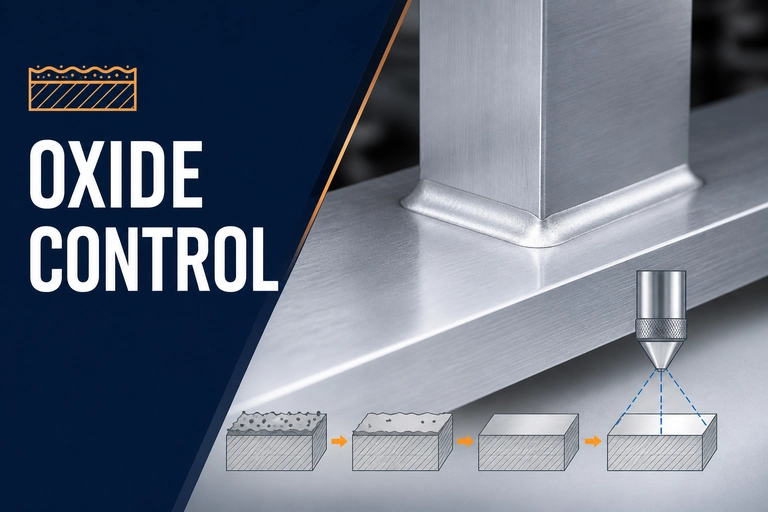
Aluminum vacuum brazing surface preparation determines whether oxide, handling residue and joint-fit variation are controlled before the furnace cycle begins. A documented preparation route is more reliable than trying to correct a poor surface condition during brazing.
Aluminum Vacuum Brazing Surface Preparation: First Steps
Aluminum vacuum brazing begins before the load enters the furnace. Reliable wetting depends on compatible base material and filler, joint design, oxide-management method, controlled cleaning, dry handling and a qualified thermal cycle. Vacuum does not compensate for an uncontrolled surface condition.
Why surface condition is process-critical
Aluminum forms a stable oxide film rapidly. That film, together with oils, forming residue, polishing compounds, moisture and handling contamination, can interfere with filler flow and lead to incomplete joints or inconsistent leak performance. The correct preparation route depends on the alloy, filler system, joint geometry and process route; it should be qualified with the actual parts rather than copied from a different product family.
The goal is not simply a visually clean part. The goal is a repeatable surface condition that supports the selected filler and thermal cycle without introducing contamination into the furnace.
Build a controlled preparation chain
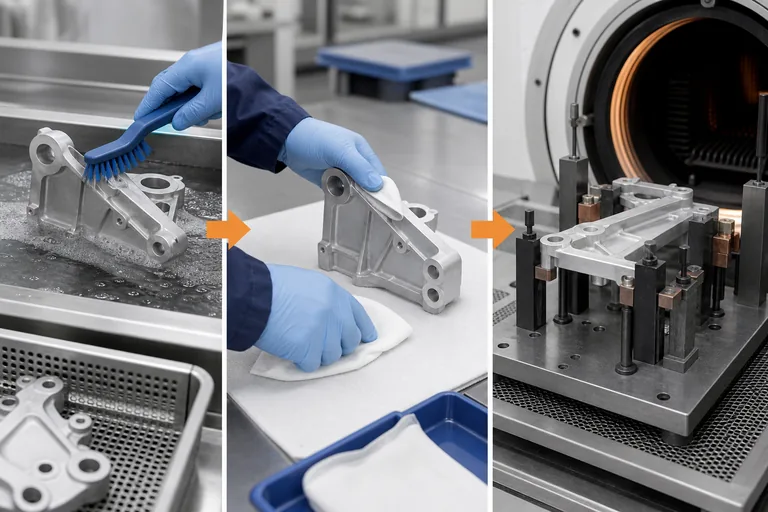
The sequence shows the handoff from cleaning to protected handling and stable fixturing before the qualified cycle.
| Stage | Purpose | Control to record |
|---|---|---|
| Material confirmation | Confirm alloy and filler compatibility | Material grade, filler form and approved combination |
| Joint and fixture review | Allow capillary flow and stable support | Clearance, filler placement and contact points |
| Cleaning | Remove process residue without leaving harmful carryover | Approved method, rinse/dry condition and handling |
| Oxide-management route | Prepare the surface according to the qualified process | Method, timing and protected storage limit |
| Loading | Protect prepared surfaces and allow uniform heating | Fixture, orientation, load density and cycle identity |
Avoid last-minute rework after cleaning
Once a surface route is qualified, unnecessary handling, mixed materials, unapproved marking fluids or repeated exposure to uncontrolled shop conditions can undo it. Establish a clear handoff between fabrication, cleaning and furnace loading. Use clean fixtures and packaging appropriate to the validated process, and document how long a prepared part may wait before it is loaded.
For joint geometry and fixture decisions, see the Vacuum Brazing Joint Design and Clearance Guide. Surface preparation and joint design work together; neither can correct a mismatch in the other.
Verify the complete process, not a coupon alone
- Define the aluminum grades, filler material, joint type and service requirement.
- Qualify the cleaning and oxide-control route on representative production material.
- Use the intended fixtures, load density and furnace work-zone position.
- Record the thermal cycle, vacuum condition and any controlled gas steps.
- Evaluate joint fill, appearance, dimensions, leak tightness and other applicable acceptance features.
- Review a change in material, supplier, cleaning chemistry, storage time, fixture or furnace condition before using the prior approval.
For broader process sequencing, read Vacuum Brazing: Step-by-Step Guide for Industrial Applications. Heat-exchanger teams can use the site’s Liquid Cooling and Heat Exchanger Manufacturing guide to frame their application.
Aluminum brazing equipment should be evaluated with the joint, filler, surface route, load envelope, temperature control, vacuum condition, cooling method and quality-verification plan. Equipment selection and process qualification should be developed together. Start with Vacuum Furnace Systems to compare furnace families, then use the Vacuum Brazing Furnace system family to assess the equipment architecture and qualification inputs before selecting the aluminum-specific configuration.
When the joint material is aluminum, review the High Vacuum Aluminum Brazing Furnace after family selection so the cleaning route, oxide-control requirement, load and verification plan can be specified at configuration level.
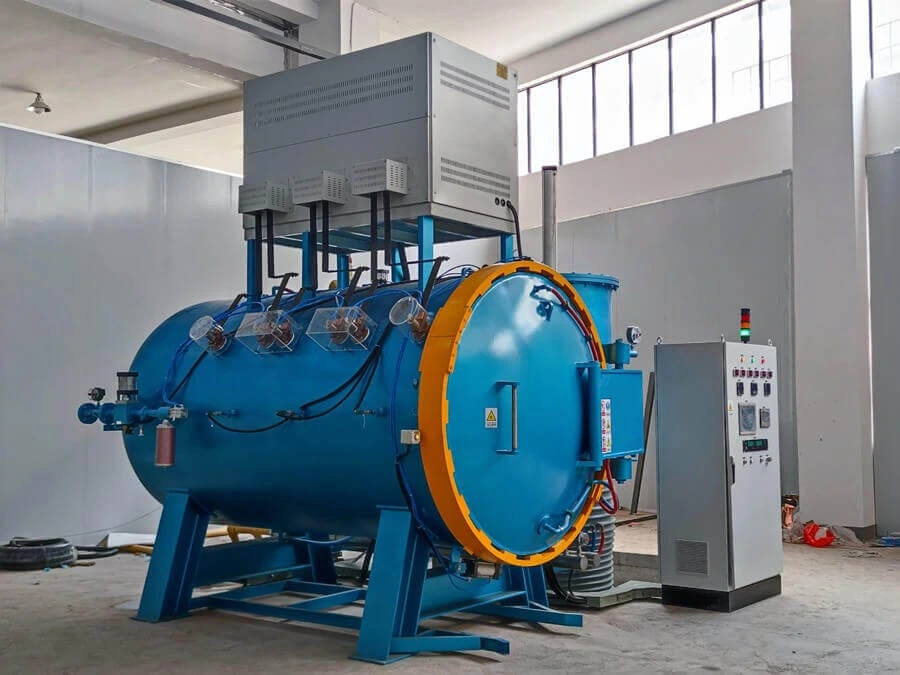
High Vacuum Aluminum Brazing Furnace
A project review should align the furnace configuration with the qualified aluminum joint, thermal cycle, work-zone, loading and acceptance requirement.
- Surface-sensitive process review
- Work-zone and load configuration
- Qualification-oriented data and acceptance planning
What to include in your enquiry
Bring the surface route and joint design into the first engineering discussion.
- Aluminum grades, filler material and joint drawing
- Surface preparation and cleaning process used today
- Load size, fixture design, part quantity and production rate
- Target temperature, vacuum/atmosphere sequence and cooling need
- Leak, strength, dimensional and inspection requirements
Technical references
- AWS C3.7M/C3.7 — Specification for Aluminum Brazing — official AWS specification covering fabrication, equipment, materials, procedures and inspection for assured-quality aluminum brazed joints.
- AWS C3.14M/C3.14 — Evaluation of Brazed Joints — official AWS C3 committee reference describing visual and metallographic methods for evaluating brazed-joint quality.