Carbon and graphite
Review cleanliness, load support, hot-zone compatibility, temperature class and the permitted vacuum or gas route.
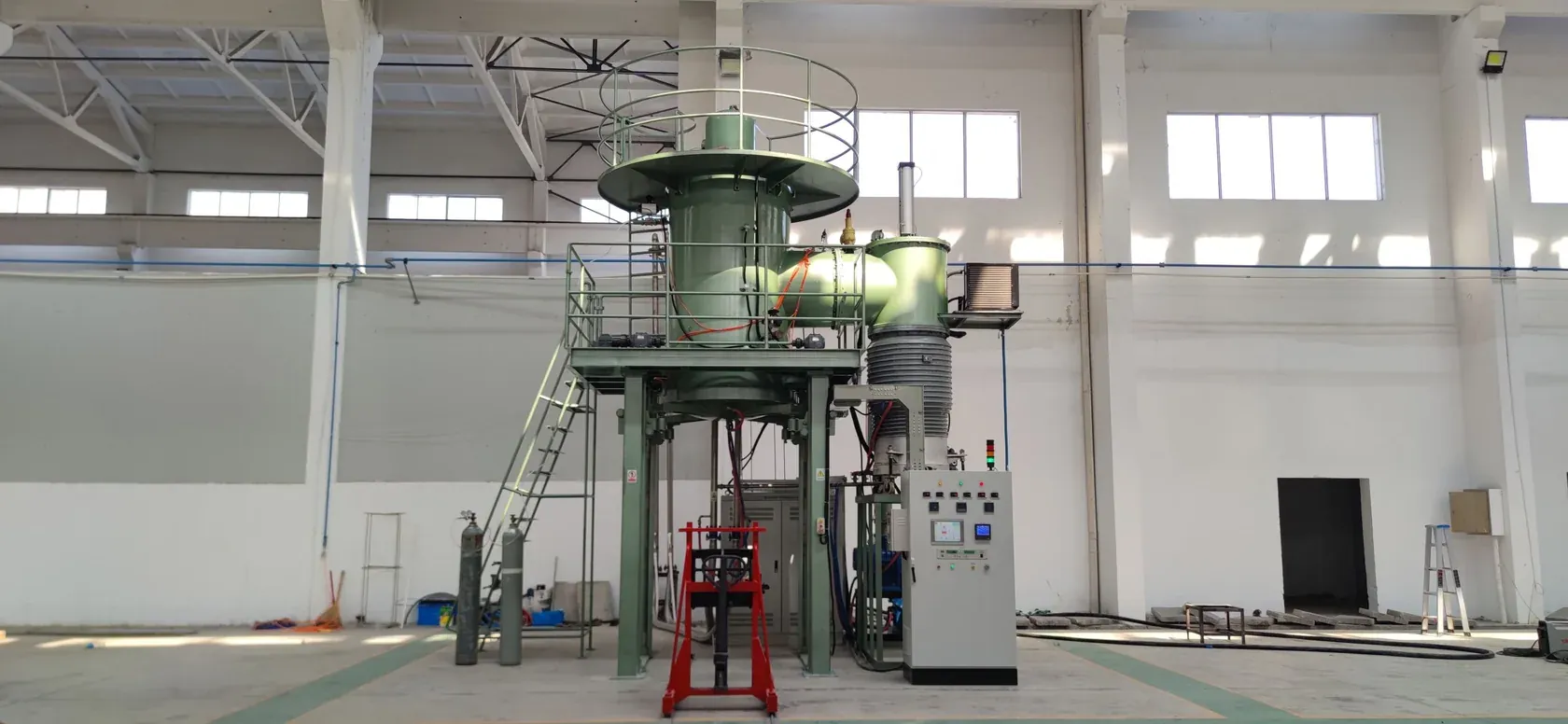
VTSL vertical bottom-loading platform
A configurable high-temperature vacuum furnace for compact, heavy, tall or fixture-intensive loads. The carrier, graphite hot zone, vacuum train, lift mechanism and controls are defined around the real load and qualified process.
Architecture fit
Bottom loading combines external fixture preparation with controlled vertical transfer into the hot zone. Use these four inputs to match the furnace architecture to the production load.
Define part, setter, tray and fixture dimensions as one working envelope, including loading clearance.
Confirm parts, tooling and carrier mass together so the lifting system and support structure are sized around the real load.
Specify temperature, dwell, vacuum, argon backfill, cooling and any pressure-capable requirement by process stage.
Agree carrier preparation, lift sequence, interlocks, FAT evidence, site utilities and SAT responsibilities before fabrication.
Configuration comparison
Compare VTSL configurations by usable work zone, total loaded mass, temperature, vacuum and gas capability. SYNHTE matches the chamber, carrier, hot zone and controls to the required production cycle.
| Configuration | Working zone | Load basis | Temperature | Vacuum / atmosphere |
|---|---|---|---|---|
| VTSL-120 | Ø350 × H400 mm uniform zone | ≤200 kg including tray | 1,800 °C maximum; ≤1,650 °C high-temperature operation with W-Re thermocouple control | High-vacuum performance data plus argon backfill up to 0.8 bar |
| VTSL-8012 | Ø800 × H1,200 mm uniform zone | 1,500 kg including tooling | 1,350 °C use temperature | Configured for the required production process and atmosphere cycle |
| Large VTSL | Ø2.3 m × H1.4 m working space | Sized for the complete carrier and fixture assembly | 2,000 °C working temperature | 12 bar gas-pressure capability |
| Custom VTSL | Configured around the complete production envelope | Parts, trays, fixtures and carrier included | Class and measurement method defined by process | Pump train, gas handling and pressure boundary defined by project |
Controlled handling
Bottom loading separates fixture preparation from the sealed thermal cycle. The sequence protects the load geometry while coordinating carrier movement, chamber closure, vacuum, heating and cooling.
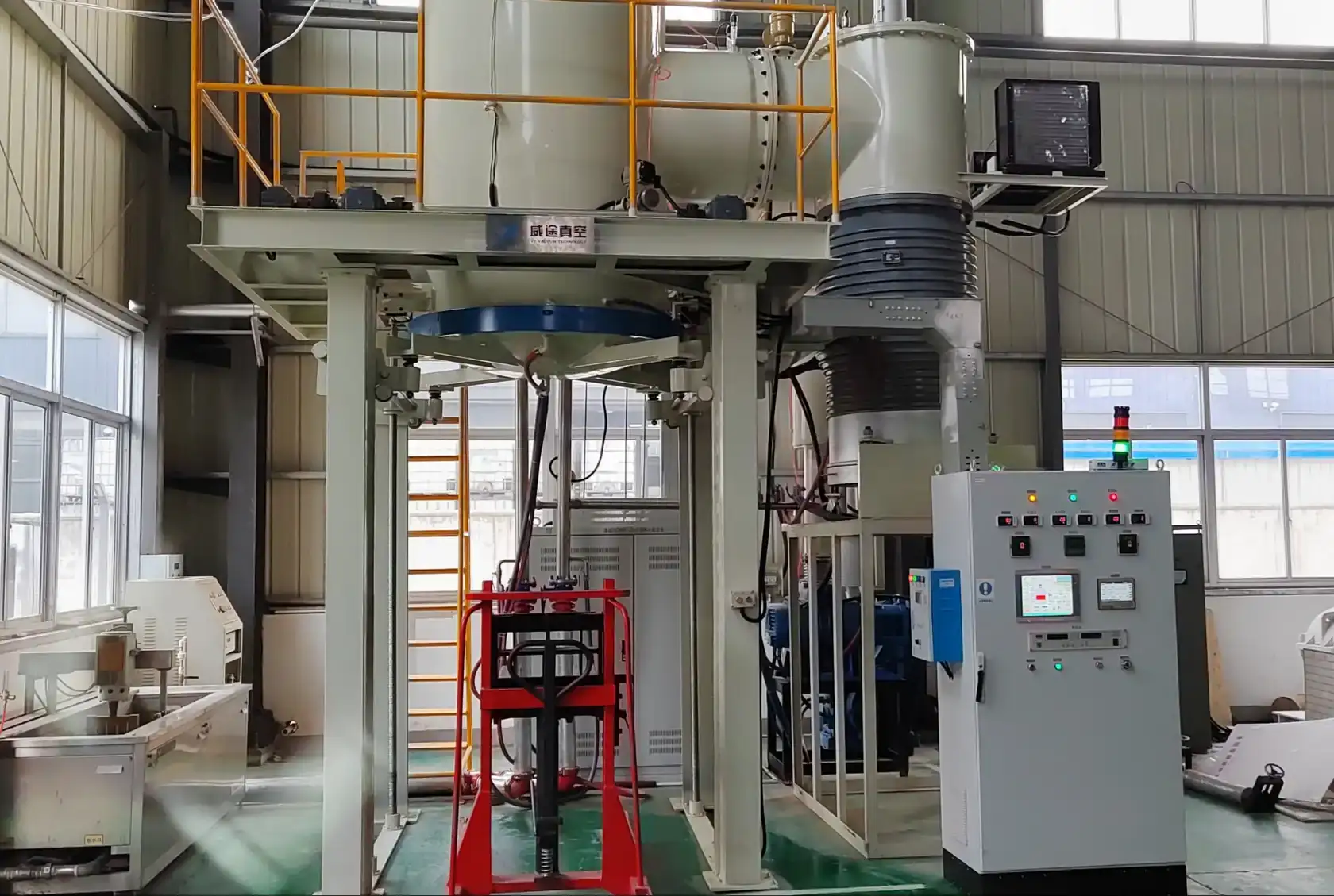
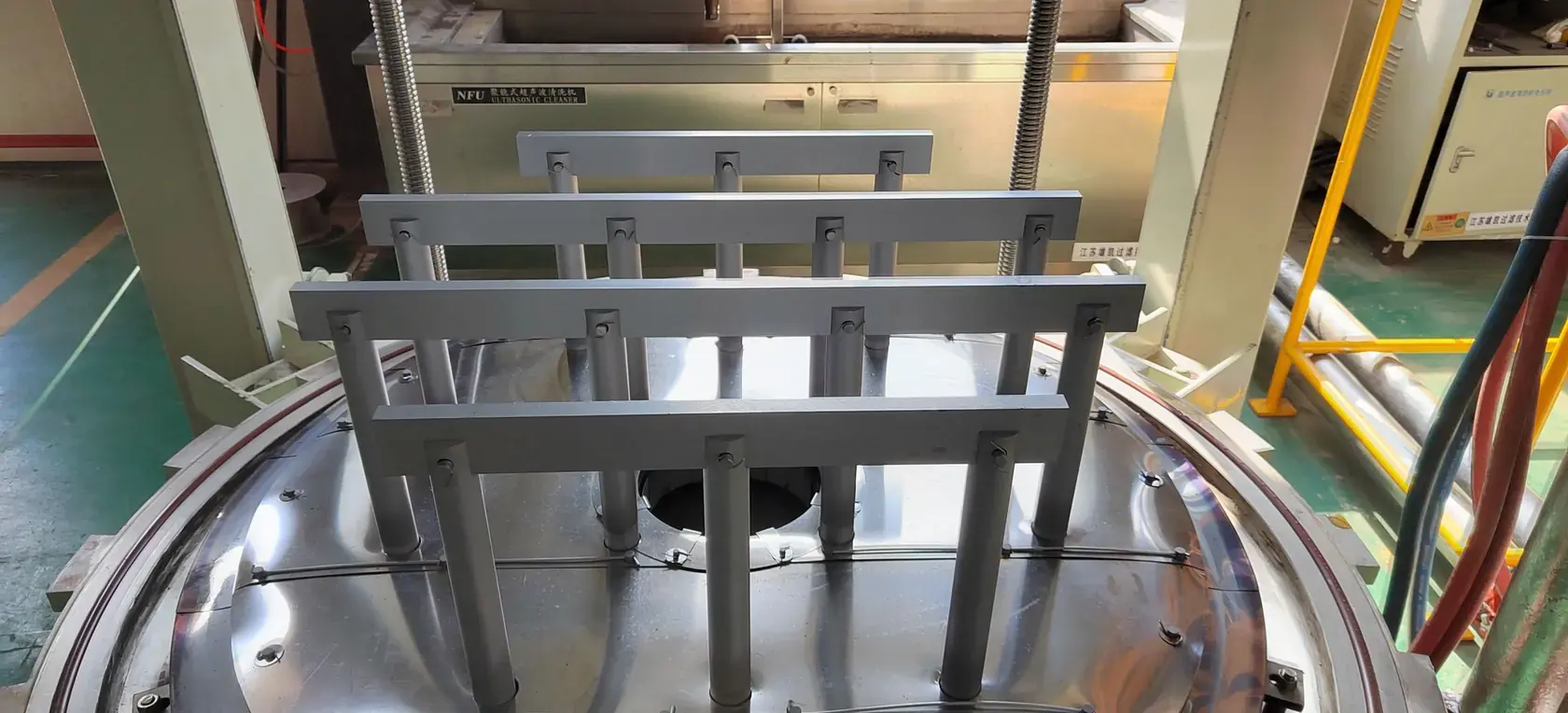
Confirm part orientation, setters, trays, fixtures, center of mass, clearance and total loaded mass.
Arrange the complete load outside the chamber where access and inspection are clearer.
Move the carrier on its guided path, confirm position and complete the chamber-closing sequence.
Coordinate pumping, heating, dwell, optional argon backfill and the configured control limits.
Complete controlled cooling and any permitted backfill before opening or carrier movement.
Return the carrier for documented inspection and safe removal of parts, trays and fixtures.
Carrier position, chamber closure, vacuum, temperature and cooling permissives are coordinated in the control sequence and verified during equipment acceptance.
System architecture
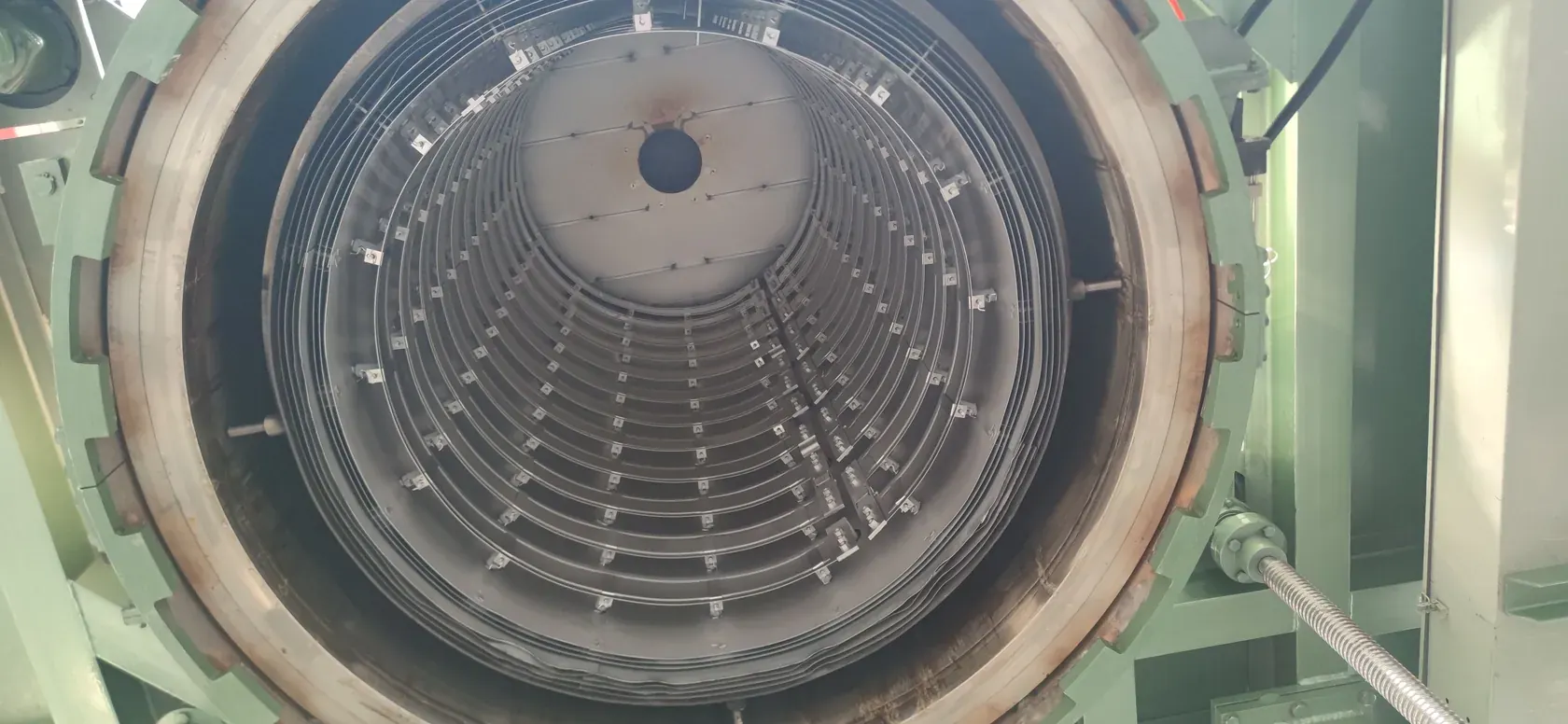
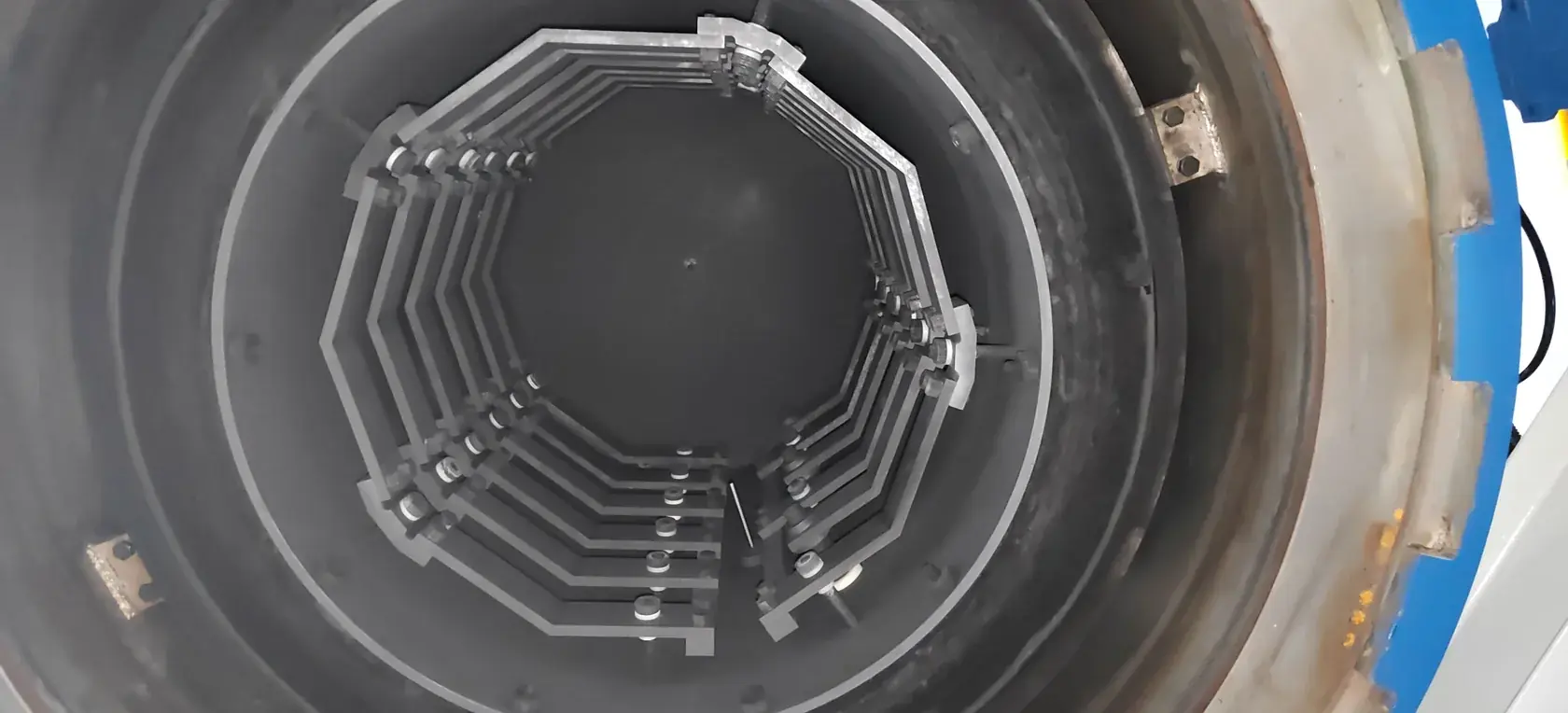
The carrier, fixture, hot zone, vacuum train, gas system and controls are engineered as one operating system for repeatable loading and thermal execution.
Material and process fit
VTSL configurations can support graphite and carbon products, technical ceramics, powder-metallurgy components and refractory materials when the validated route requires controlled loading, vacuum or argon and programmable thermal execution.
Review cleanliness, load support, hot-zone compatibility, temperature class and the permitted vacuum or gas route.
Define setter design, green-part fragility, shrinkage, packing density, temperature uniformity and controlled cooling.
Confirm binder or volatile content, vacuum and atmosphere stages, dwell, load geometry and the evidence used to accept density or dimensional results.
Acceptance planning
The acceptance plan connects equipment functions to measurable evidence, identifies the test condition and assigns each result to FAT, SAT or later process qualification.
VTSL-120 data includes a nine-point temperature-uniformity result at 1,000 °C together with ultimate-vacuum, hot-working-vacuum and pressure-rise measurements. The acceptance plan records the configuration, test load, instruments, tolerances and limits for the supplied furnace.
Confirm material, loaded envelope, mass, process stages, utilities, interfaces, records and responsibilities.
Demonstrate carrier movement, chamber closure, permissives, alarms, interlocks, controls and relevant utilities.
Measure the agreed temperature, vacuum, pressure-rise, heating, dwell, cooling or gas-performance items under defined conditions.
Complete equipment records, site-readiness checks, interface commissioning, training and SAT evidence.
VTSL-120 configuration
A compact bottom-loading configuration with a Ø350 × H400 mm uniform zone, load capacity up to 200 kg including the tray, graphite resistance heating and argon backfill capability.
Ultimate vacuum, hot working vacuum, pressure-rise rate and temperature uniformity are recorded as separate acceptance items with their stated test conditions.
Discuss VTSL-120 requirementsEngineering RFQ
Provide the details below to receive a configuration proposal matched to the load, thermal cycle, atmosphere and site conditions.
Next engineering step
SYNHTE reviews the loaded envelope and thermal process, then defines the recommended working zone, carrier, hot zone, vacuum train, gas system, controls and service scope.
Technical questions
Bottom loading is suited to compact, heavy, tall or fixture-intensive loads that benefit from preparation on a lower carrier and controlled vertical movement into the hot zone. Selection is based on the material, tooling, total load mass, thermal cycle and site interfaces.
VTSL-120 provides a Ø350 × H400 mm uniform zone, a load of up to 200 kg including the tray, 1,800 °C maximum temperature, 7.9 × 10⁻⁵ Pa ultimate vacuum, 4.8 × 10⁻³ Pa working vacuum at 1,650 °C in an empty furnace, and a 0.08 Pa/h pressure-rise rate.
Yes. Available VTSL configurations include a Ø800 × H1,200 mm uniform zone with a 1,500 kg load including tooling, and a large system with a Ø2.3 m × H1.4 m working space, 2,000 °C working temperature and 12 bar gas-pressure capability.
Provide the material, green-part and finished dimensions, fixture and tray layout, total load mass, target thermal cycle, vacuum or argon requirement, throughput, utilities, site layout, documentation and acceptance requirements.
Configure the VTSL system
Share the material, loaded envelope, mass, thermal cycle, atmosphere, throughput and site interfaces. SYNHTE will prepare the carrier, working-zone, hot-zone, vacuum, control and service scope for technical review.
Download the current reference document or compare all available SYNHTE technical resources.