
Turbomolecular Pump Protection in Furnace Vacuum Systems
Turbomolecular pump protection depends on the complete installed system: backing pressure, gas load, cooling, drive status, inlet protection and the manufacturer's shutdown and service procedure. A pressure reading or a stop command alone cannot establish that a high-speed rotor is safe to access. Diagnose the operating conditions before replacing a pump, and keep rotor, bearing and internal repair work within the authorized service boundary.
This guide applies only to a furnace or auxiliary vacuum system actually fitted with a turbomolecular pump. It does not assume that every vacuum brazing furnace uses one. Diffusion pumps, Roots boosters and oil-sealed backing pumps have different mechanisms and maintenance requirements; their oil, cooling or disassembly instructions are not interchangeable.
Identify the installed pump and its protection functions
Start with the pump, electronic drive and furnace documentation. Record the exact pump variant, bearing arrangement, mounting orientation, approved connection hardware, backing pump, foreline layout, cooling method, venting arrangement and control interface. A replacement with a similar inlet diameter may still have different mounting, cooling, control or backing requirements. Keep the revision of the installed package with the furnace record.
A turbomolecular pump transfers momentum through fast-moving rotor stages and stationary stages. It needs a suitable backing condition at its outlet rather than exhausting the process directly to atmosphere. The manufacturer may combine different stage and bearing designs, so a general description cannot establish an allowable gas load, maintenance interval or safe venting rate for an unidentified unit.
Define who owns each protective function: the furnace controls, pump drive, backing package and facility utilities. Confirm where speed, temperature, pressure and warnings are available. A healthy-looking furnace screen may display only part of the drive's diagnostic information. Preserve detailed drive events before a reset removes evidence of the original condition.
Separate backing-path problems from pump faults
The high-vacuum inlet, foreline outlet and backing pump do different jobs. A healthy turbo drive cannot compensate for an unsuitable or restricted backing path.
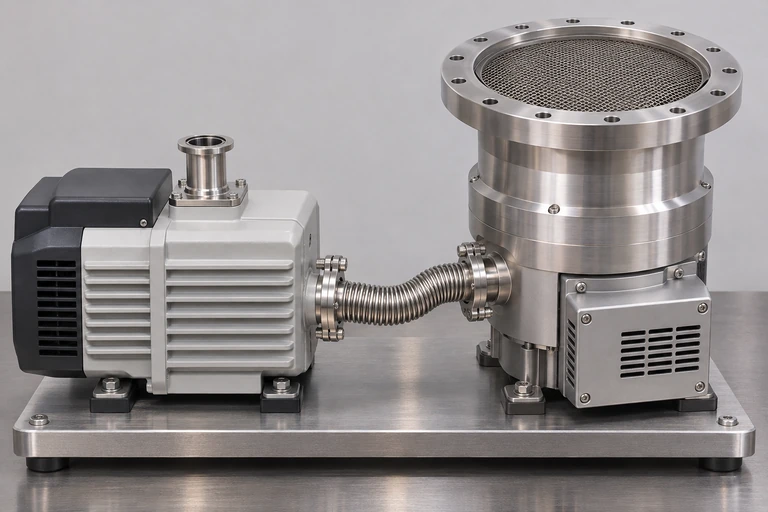
When run-up slows or the expected speed is not reached, compare foreline pressure, backing-pump status, gas throughput, valve state and cooling against a known-good operating condition. A chamber leak or a wetter production load can increase the gas entering the same pump. These are different causes from a damaged rotor or bearing, even when the final pressure symptom looks similar.
Check the documented flow path before proposing a larger pump. A closed isolation valve, contaminated trap or restricted connection can change the conditions at the turbo outlet. The permitted diagnostic method must come from the installed system procedure; do not open a running foreline or substitute a hose arrangement to see whether pressure improves.
Use the high-base-pressure diagnostic guide for the wider chamber-versus-load investigation. Keep the specific turbo evidence separate: requested speed, actual speed, run-up behavior, drive warning, backing condition and the thermal state when the event occurred. The same pressure endpoint without that context is an incomplete comparison.
Interpret temperature and speed together
Cooling is a pump protection function, not simply a utility connection. Confirm whether the installed model uses air, water or another specified arrangement, and inspect that arrangement using the approved safe-access method. Blocked ventilation, inadequate water flow, elevated ambient temperature and excessive gas load can create related thermal symptoms, but they require different corrections.
Some drives reduce power when a temperature warning occurs and stop the pump when a protective limit is reached. The resulting speed change should be read with the warning history rather than immediately described as an electrical supply failure. Consult the exact drive's fault definitions; a code or indicator color from another pump is not a universal diagnostic key.
Compare like-for-like cycles. Record the starting condition, chamber exposure, load type, pump configuration and cooling state. Repeatedly resetting a temperature-related trip without correcting its cause does not demonstrate recovery. If a safe operating condition cannot be established, contain the process and involve the qualified equipment or pump service team.
Keep the rotor boundary intact during service planning
The inlet protection and rotor assembly are not interchangeable service surfaces. A stopped command is not evidence that the rotor has reached standstill.
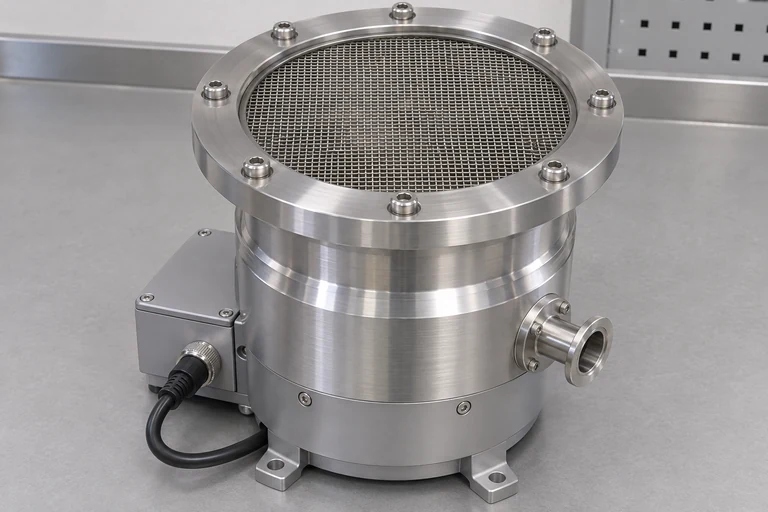
A rotor can continue turning after the run command is removed. Depending on the design, the rotating assembly can also continue to supply electrical energy during run-down. Do not disconnect the pump from its drive, loosen its mounting or reach through an inlet because the main process has stopped. Establish the documented standstill and electrical-isolation conditions first, and prevent unintended restart.
Venting is also model dependent. The permitted entry point, gas, pressure-rise behavior, backing-pump sequence and power-loss response belong to the installed manufacturer's procedure. Opening a small isolated volume abruptly can load a rotor differently from venting a large chamber through an approved controlled path. Do not copy a delay or pressure-rise number from an unrelated pump manual.
Retain the specified flange, fasteners, support and protective accessories. Their function includes mechanical containment and mounting integrity, not only vacuum sealing. A loose foreign object, unusual noise or suspected rotor contact is a reason to stop the investigation at the service boundary, not to assume that a balancing part is harmless or attempt an improvised internal adjustment.
Do not transfer oil-pump maintenance rules to a turbopump
Identify the bearing and lubrication design before discussing service. A mechanically supported or hybrid-bearing pump does not necessarily share the maintenance needs of a magnetically levitated design. An oil change interval from the backing pump cannot define the turbo bearing's condition, and a diffusion-pump working fluid is not a substitute lubricant.
Use the exact manual to separate permitted operator inspections, replaceable external modules and work reserved for trained service personnel. Keep contamination history with any removal or shipment. A pump exposed to process residue needs an appropriate assessment and handling declaration; a clean exterior does not establish the condition of wetted or vacuum-exposed surfaces.
The diffusion-pump design guide remains useful when comparing a different vacuum architecture, but it is not a turbopump repair instruction. Likewise, the furnace maintenance checklist organizes recurring checks without replacing a pump-specific service procedure.
Prove recovery against the recorded operating state
After the authorized correction, retain the as-found condition, changed component, responsible technician and tests required by the equipment procedure. Check the affected mounting, seals, cooling, backing path, drive configuration and protective functions before returning the system to a process load. A controller reset is not an acceptance test.
Compare a controlled reference condition with the previous healthy record: pump-down shape, pressure, run-up, stable speed, temperature behavior and absence of the original warning. Keep the same measurement locations and relevant chamber configuration. A different empty-chamber test may help diagnose the system, but it cannot by itself prove that a changed production load remains qualified.
Review the effect on product evidence. Opening the vacuum train, changing a pump package or disturbing a contamination-sensitive connection can require leak checks, conditioning and process confirmation. The approved quality plan defines the scope. Preserve the original failure trace so a repeated problem can be distinguished from a new fault rather than hidden by a new baseline.
Specify the furnace around the actual vacuum duty
For new equipment, discuss vacuum brazing furnace systems using the material, gas load, process pressure, contamination risk and production cycle. A particular pump family is not automatically the correct choice because it has an attractive ultimate-pressure figure.
For a compatible high-temperature batch route, the High-Temperature Vacuum Brazing Furnace is a relevant platform for a configuration discussion. Do not assume that a turbomolecular package is standard or interchangeable with another vacuum train. Confirm the proposed pumping architecture, protection, service access and acceptance evidence in the actual technical agreement.
High-Temperature Vacuum Brazing Furnace
For a compatible joining route, review the furnace's working vacuum, contamination protection, backing architecture, cooling, service access and retained process records. The pump package must be agreed for the application; a turbo configuration is not assumed to be standard.
Prepare the engineering evidence
Share the installed pump and drive identities, backing package, cooling arrangement, normal and abnormal speed/pressure traces, warnings, load history and the furnace process requirement.
Technical references
- Pfeiffer: turbomolecular technology — Pump principle, backing requirement and differing bearing designs.
- Pfeiffer: HiPace 10 Neo operating instructions — Model-specific example of temperature protection, run-down, controlled venting and service responsibility; not a transferable furnace procedure.