SYNHTE engineering guide
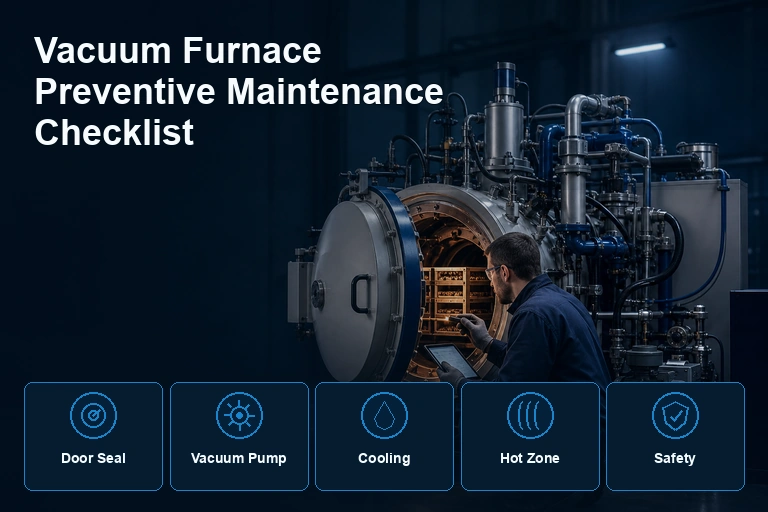
Vacuum Furnace Preventive Maintenance Checklist: Daily, Monthly and Annual Tasks
| Frequency | Primary focus | Evidence to keep | Escalate when |
|---|---|---|---|
| Every shift | Alarms, chamber condition, door seal, utilities and gas availability | Cycle record and operator check | A value or response differs materially from the accepted baseline |
| Weekly / monthly | Hot zone, vacuum train, cooling circuit, mechanisms and fittings | Inspection findings, photos and measured trends | Damage, contamination, restriction or repeat drift appears |
| Planned outage | Pump and valve service, electrical inspection, safety tests and calibration | Parts changed, as-found condition and test result | A critical function cannot be proven after service |
| Qualification interval | Temperature uniformity, system accuracy and controlled instruments | Approved test report and disposition | The process or governing specification requires requalification |
Vacuum furnace preventive maintenance before every production shift
Start with the condition that most directly affects the next load:- Confirm that the prior cycle ended normally and review alarms, vacuum trend and cooling data.
- Inspect the chamber, hearth, fixtures and loading area for loose material, oil, binder residue or damaged insulation.
- Check that the door seal and sealing faces are clean, undamaged and correctly lubricated only with the approved vacuum-compatible product.
- Verify cooling-water flow, pressure and temperature are within the furnace’s approved limits. Look for hose damage, leaks and abnormal pump noise.
- Confirm the required quench gas and supply pressure are available; do not substitute a gas without approved process review.
- Check that safety interlocks, emergency stops, gas detection and exhaust arrangements are ready for the process being run.
Weekly and monthly work that prevents quality drift
At least weekly, inspect the hot-zone heating elements, shields, retainers, thermocouple protection and hearth supports while the furnace is cold and safely isolated. A bent shield or loose retainer can create a short circuit or change radiation patterns long before a visible part-quality problem appears.Also inspect the vacuum system in stages. Check pump oil condition where an oil-sealed pump is used, observe foreline condition, confirm the correct valve sequence, and look for oil migration or contamination. Drain traps and change filters only according to the manufacturer’s schedule and the process contamination load; changing parts on a calendar without investigating the cause can hide a problem.Monthly tasks should include verification of water quality controls, heat-exchanger condition, electrical connections, door and lift mechanisms, pressure gauges and gas-line fittings. Compare current pump-down and leak-up data with the machine’s accepted baseline. If a change is material, troubleshoot it before it affects a production lot.Quarterly and annual maintenance planning
Schedule a deeper planned outage around production demand. The scope normally includes hot-zone inspection and repair, vacuum-pump service, valve inspection, cooling-circuit cleaning as specified, calibration/verification activities, electrical inspection, safety-device tests and review of backup parts. Keep records of the part number, technician, condition found and corrective action—not simply “PM completed.”For controlled or aerospace work, align calibration, system-accuracy tests, temperature-uniformity surveys and thermocouple management with the customer specification and the applicable controlled standard. A furnace is not “qualified” merely because it reaches setpoint.Five warning signs that deserve immediate attention
- Pump-down takes longer than the accepted baseline.
- Base pressure is worse or rises quickly during a hold.
- Hot-zone current, power demand or temperature response changes without a new load.
- Cooling-water temperature rise, pressure drop or fan current is abnormal.
- The same cosmetic, distortion, hardness or leak failure begins appearing in more than one load.
Recommended equipment
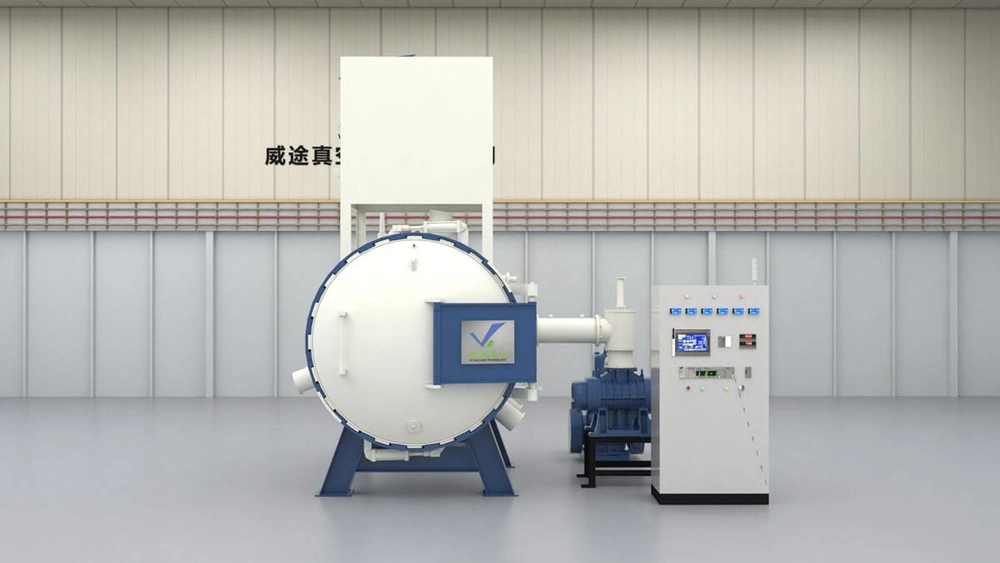
SYNHTE Vacuum Furnace Systems
For a new production line, maintainability should be designed in from the start. Compare service access, hot-zone construction, trend-data export, cooling-water requirements and locally held spare parts across the brazing, heat-treatment and sintering process families.- Service-access planning
- Hot-zone and vacuum trend records
- Cooling and utility requirements
Build maintenance into the furnace specification
When specifying a new vacuum furnace, ask how the hot zone can be inspected, which consumables are required, what trend data the control system exports, what water and gas quality are required, and what spare parts should be held locally. Maintainability is part of repeatable production—not an afterthought.If you need a furnace platform matched to your load, thermal cycle and service environment, contact SYNHTE with the work-zone size, process temperature, materials, cooling target and production rhythm.What to include in your enquiry
These details let the engineering team respond with a relevant configuration instead of a generic catalogue answer:- Usable work-zone dimensions and maximum load weight
- Material, process temperature and representative cycle
- Vacuum target and cooling or quench method
- Daily cycle count and planned operating schedule
- Available utilities, installation country and required standards