Hydrogen Tube Furnace Safety: Purging and Process-Control Basics
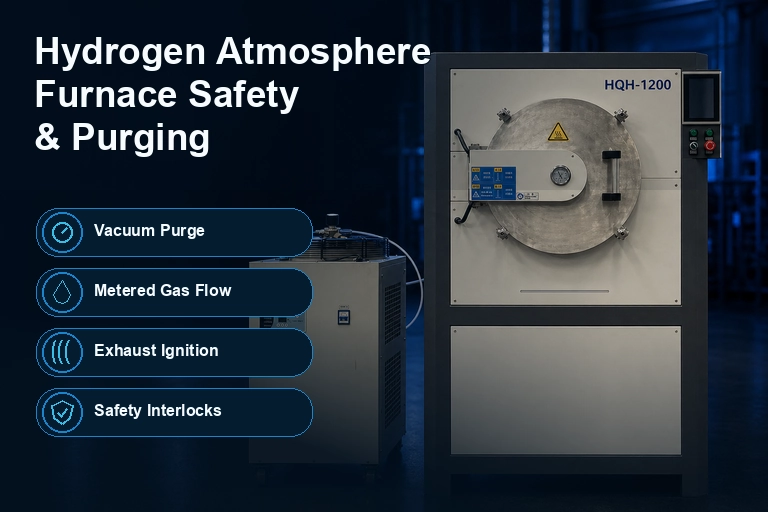
Hydrogen can be valuable for controlled thermal processing, but it is not a general-purpose furnace atmosphere. A hydrogen process must be designed, installed, commissioned and operated under the applicable local regulations, plant safety rules, gas-supplier requirements and equipment manufacturer documentation. This article is a planning guide; it is not a substitute for a site-specific hazard assessment or operating procedure.
| Safety layer | Design question | Acceptance evidence | Owner |
|---|---|---|---|
| Gas and purge logic | What verified conditions permit hydrogen admission? | Cause-and-effect test and recorded sequence | Supplier + site engineering |
| Detection and ventilation | How are release, extraction loss and alarm states handled? | Functional test under the approved plan | Facilities / EHS |
| Utility failure response | What happens after loss of power, cooling, gas or exhaust? | Documented safe-state test | Controls + EHS |
| Operations and maintenance | Who may run, bypass, isolate or service the system? | Approved SOP, training and test records | Site management |
Hydrogen tube furnace safety starts with a documented hazard review
Before equipment selection or production, define the gas composition, flow range, pressure range, temperature profile, exhaust handling, materials processed, expected by-products and emergency scenarios. Involve process engineering, EHS, facilities, gas-supply specialists and the furnace supplier. Confirm the applicable electrical classification, ventilation, detection, relief, purge, ignition-control and emergency-shutdown requirements for the installation location.
The safety design should include what happens when power, cooling water, gas supply, extraction or control communication is lost. A safe state must be engineered and tested—not assumed.
Purging must be an approved sequence
Hydrogen must never be introduced into equipment containing an unsafe oxygen/air mixture. The required evacuation, inert-gas purge, verification and transition sequence must be designed for the actual furnace volume, piping, exhaust route and safety system, then approved by qualified personnel. Do not copy purge times or pressures from another furnace or an online example.
Automated interlocks should prevent hydrogen admission until the approved preconditions are met. The logic, sensor setpoints and bypass permissions should be documented and periodically tested. Operators need a clear response if a purge or monitor check fails: stop, isolate, make safe and escalate according to the written procedure.
Process quality depends on gas quality and system integrity
For thermal results, control gas purity, moisture/dew point where relevant, flow stability, leak tightness, tube/retort condition and exhaust behavior. Contamination can affect surface finish, oxide reduction, carbon/oxygen pickup and repeatability. Record the operating values that define the qualified process; a cylinder label alone is not evidence of process quality at the furnace.
Inspect seals, gas lines, flow-control components, ventilation and monitoring devices under the defined preventive-maintenance program. Any modification to piping, controls, sensor types, furnace tube, retort or exhaust routing should be reviewed before resuming the qualified process.
Operator discipline is a control layer
Only trained, authorized personnel should operate a hydrogen furnace. Their procedure should specify pre-start checks, gas identification, utility checks, allowed recipes, alarm response, unloading conditions, maintenance isolation and required log entries. The procedure should also identify which actions require an engineer or EHS approval instead of operator intervention.
Hydrogen should only be selected when the material and process need it. If a vacuum or inert route can meet the surface and metallurgical requirement, compare the wider vacuum sintering furnace and vacuum heat treatment furnace options before accepting the additional gas-safety system. The safer process route is the one that meets the requirement with a fully engineered and validated atmosphere.
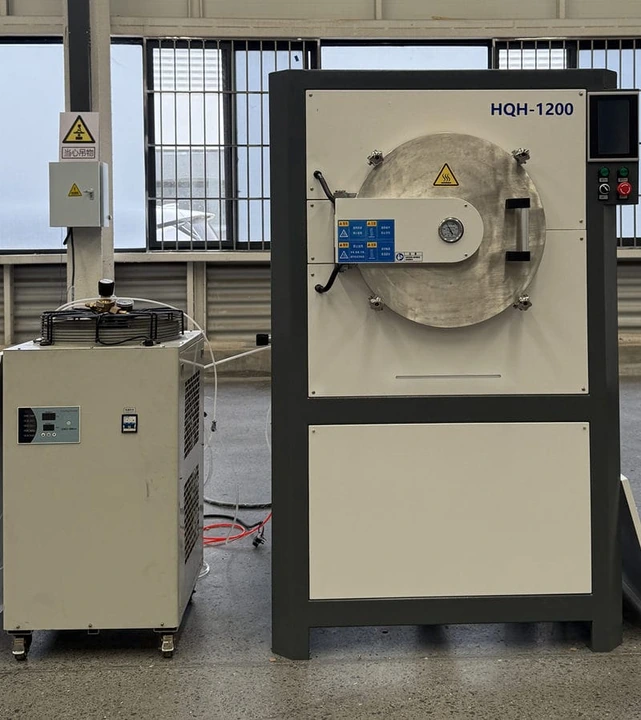
Atmosphere Tube Furnace for Hydrogen Heat Treatment and Sintering
The relevant SYNHTE platform combines a controlled furnace chamber with the project-specific gas train, purge sequence, monitoring and interlocks. Final configuration must be reviewed against the installation country, site risk assessment and applicable codes.
- Project-specific purge and gas train
- Interlocks and safe-state logic
- Site integration and acceptance testing
What to provide for a furnace enquiry
For a hydrogen-atmosphere project, provide the process temperature, effective work zone, part/load description, gas composition, flow/pressure requirement, whether vacuum pre-purge is needed, exhaust-treatment requirement, utilities, local installation country and applicable customer standards. This lets SYNHTE match the furnace body, gas train, purge approach, monitoring and safety interlocks to your real application.
Review the Atmosphere Tube Furnace for Hydrogen and contact SYNHTE for a controlled, application-specific proposal.
Technical safety note: Hydrogen process parameters and safety settings must be validated by qualified site personnel under the applicable regulations and manufacturer documentation.
What to include in your enquiry
These details let the engineering team respond with a relevant configuration instead of a generic catalogue answer:
- Installation country, site standard and responsible EHS contact
- Process temperature, work zone and load description
- Hydrogen concentration, flow and pressure ranges
- Inert-gas and vacuum pre-purge requirements
- Ventilation, exhaust treatment, utilities and emergency interfaces
Define the gas train and safety functions for your site
Share the process temperature, work zone, gas composition, flow and pressure needs, exhaust route, installation country and applicable standards. Send the hydrogen-furnace requirement to SYNHTE for an application-specific proposal.