
Cemented Carbide Vacuum Sintering: Carbon Balance and Defect Prevention
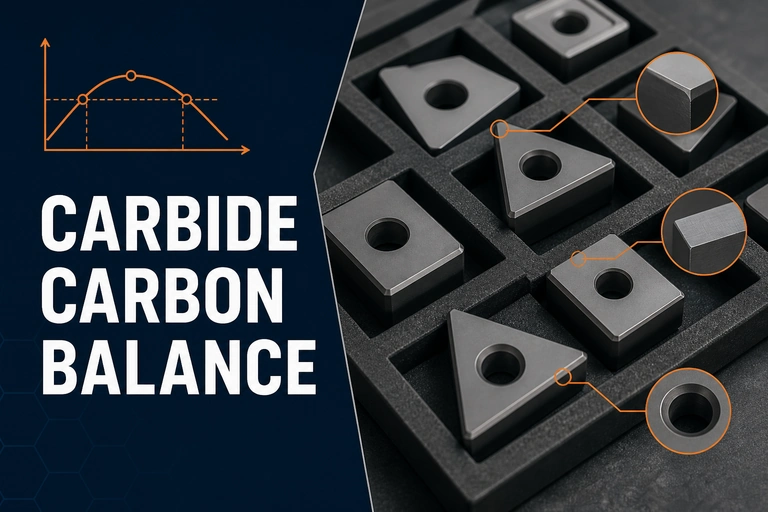
Cemented carbide vacuum sintering carbon balance depends on the powder condition, green part, furnace environment and loading practice working together. Carbon-related defects are best prevented by controlling the defined process inputs before the cycle, not only by inspecting the final part.
Cemented Carbide Vacuum Sintering Carbon Balance: First Checks
Quick answer
Cemented carbide sintering requires carbon control across the whole process, from powder and binder through debinding, furnace condition, atmosphere or vacuum, loading and the thermal cycle. Carbon-related defects cannot be corrected reliably by changing a single furnace setting without tracing the material and process history.
Why carbon balance is critical
In cemented carbide processing, small changes in chemistry and furnace environment can influence the final microstructure and performance. The relevant risks depend on the exact carbide grade, binder system, additives, green-part condition and sintering route. Treat carbon balance as a qualified material-process system rather than a generic “high temperature” problem.
Carbon sources and sinks can include incoming powder, organic binder, debinding residue, furnace construction, fixtures, process gases, oxygen-bearing contamination and improper handling. A meaningful investigation maps these variables against the actual defect and lot traceability.
Use a defect-prevention map
The visual separates material-condition and defect signals that should be reviewed before changing a qualified recipe.
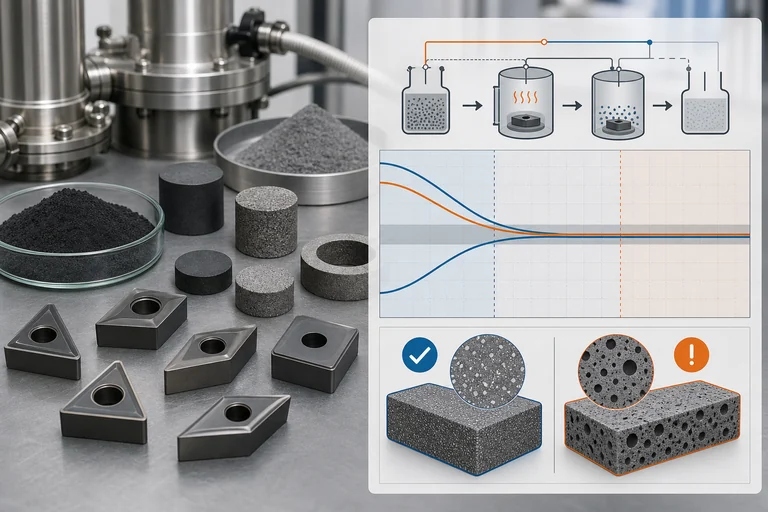
| Area | Questions to ask | Evidence to retain |
|---|---|---|
| Powder and formulation | Is the lot and approved chemistry unchanged? | Material certificate, formulation and lot traceability |
| Green part and debinding | Was binder removal complete and uniform? | Debinding route, loading map and inspection findings |
| Furnace condition | Were the hot zone, fixtures and chamber clean and qualified? | Maintenance record, prior cycle data and contamination controls |
| Cycle and atmosphere | Did the approved heating, hold and gas/vacuum sequence run as intended? | Recorded curve, pressure/gas trace and alarms |
| Finished part | What is the exact microstructural or dimensional signal? | Inspection location, test method, lot and comparison sample |
Protect the furnace environment
Furnace cleanliness, fixture condition and controlled loading help prevent one lot from influencing another. Review whether any new lubricant, cleaning method, graphite component, tray material, repair, gas supply or unapproved part has entered the process. If a production issue emerges after a change, the change history may be more valuable than a broad adjustment to peak temperature.
Planned equipment checks support this discipline. The Vacuum Furnace Preventive Maintenance Checklist provides a starting structure for protecting vacuum-system and hot-zone condition.
Qualification and change control
- Define the approved carbide grade, binder system and required final properties.
- Document green-part condition, debinding route, fixture and loading orientation.
- Use a clean, qualified furnace condition and the controlled vacuum/atmosphere sequence.
- Record the complete thermal cycle and any process deviations.
- Inspect the required density, structure, dimensions and performance using a defined sampling plan.
- Review material, fixture, furnace and recipe changes before applying a previous approval to a new lot.
The general Vacuum Sintering Furnace Applications guide explains the broader powder-metallurgy context. For material-specific production, finalize the cycle and acceptance conditions with the responsible process and quality team.
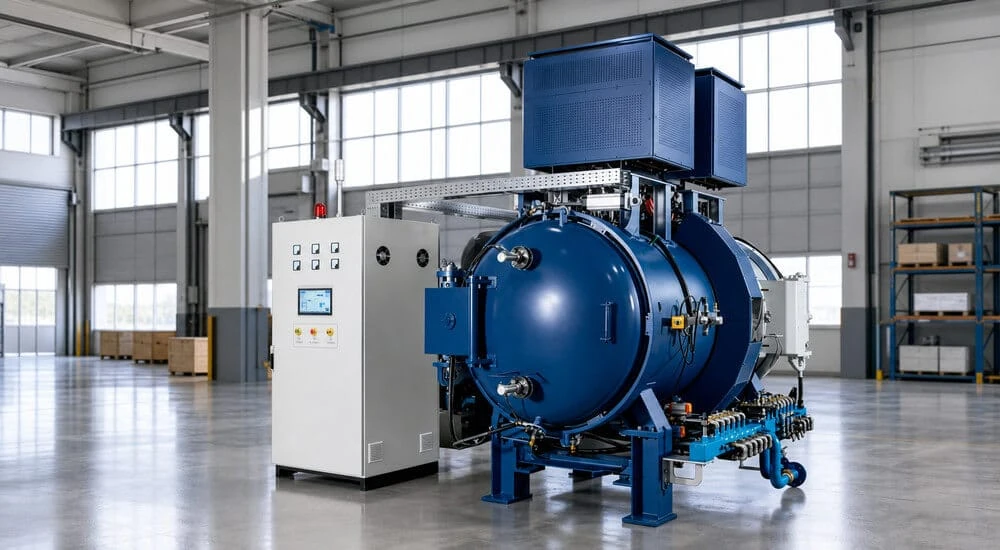
Vacuum Sintering Furnace
System design should begin with the material, thermal curve, atmosphere requirement, load arrangement and records needed to control a qualified sintering process.
- Controlled process-environment review
- Load and hot-zone configuration
- Process data for traceability and acceptance
What to include in your enquiry
Provide the qualified material and quality context for a useful furnace discussion.
- Carbide grade, binder system, powder/material documentation and part drawing
- Green-part dimensions, debinding route, fixtures and load mass
- Required density, microstructure, dimensions and performance tests
- Target temperature range, vacuum/atmosphere sequence and cooling requirement
- Production volume, traceability and acceptance-record expectations
Technical references
- ISO 3908 — Determination of Insoluble (Free) Carbon — official ISO method for determining the mass fraction of insoluble free carbon in carbides and hardmetals.
- ISO 4499-4 — Porosity, Carbon Defects and Eta Phase — official ISO metallographic reference for characterising porosity, carbon defects and eta-phase content in hardmetals.