info@synthe-corp.com

+86-155-3785-7393

1100°C controlled-atmosphere furnace

Hydrogen Atmosphere Tube Furnace for Heat Treatment & Sintering

HQH-1200 combines vacuum preparation, dual-zone heating and configurable hydrogen, nitrogen or argon control for reduction, protective heat treatment and selected sintering processes.

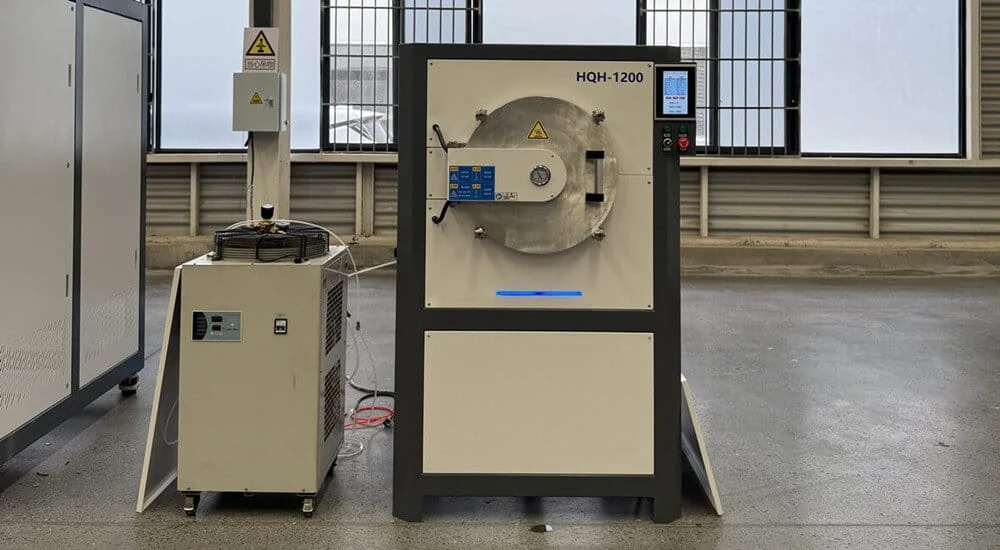
SYNHTE HQH-1200 atmosphere tube furnace with cooling unit and control cabinet
HQH-1200 integrated furnace system Furnace, touchscreen controls, cooling and gas-handling interfaces.
1100°Ccontinuous operating temperature
450 × 500 mmeffective work chamber
10 Paultimate vacuum
±1°Ctemperature-control accuracy
Route decision

Select the right process atmosphere

The same temperature does not make vacuum, inert gas and hydrogen interchangeable. Start from the material response, surface requirement and by-products—then define the equipment route.

Vacuum route

When pressure and contamination control lead

Use a dedicated vacuum-furnace route when the qualified process depends on deeper vacuum, controlled outgassing or vacuum-only heating rather than a reducing gas.
Inert route

When protection is enough

Nitrogen or argon may be appropriate when the process needs oxidation control or atmosphere displacement without hydrogen’s reducing action.

This platform

When reduction is process-critical

Best suited to materials and qualified thermal cycles that benefit from a reducing atmosphere and an engineered gas-safety system.

Application boundary

Where the HQH platform fits—and where another route is better

Clear process-fit criteria help match the chamber, atmosphere system and thermal cycle to the actual production requirement.

Good reasons to evaluate this furnace

  • Selected reduction, protective heat-treatment or sintering cycles that require a defined hydrogen-bearing atmosphere.
  • Batch loads compatible with the 450 × 500 mm effective work chamber and the required temperature uniformity study.
  • Processes needing vacuum preparation before controlled gas admission.
  • Projects that can define gas quality, flow, exhaust, ventilation, interlocks and acceptance tests before manufacture.

Evaluate a different system when

  • The process specification is fundamentally high-vacuum rather than atmosphere-led.
  • Integrated debinding and sintering are required for a production MIM route.
  • Continuous throughput, conveyor handling or a much larger load envelope is the primary requirement.
  • The site cannot support the engineered gas detection, ventilation, exhaust and safe-state requirements.
Technical data

HQH-1200 technical specifications

Core equipment values are shown below. Work-zone sizing, gas control, electrical supply and safety interfaces can be matched to the process and installation site.

HQH-1200 technical data
Continuous operating temperature1100°C
Effective work chamber450 × 500 mm
Retort / tube sizeØ480 mm; 600 mm effective length
Ultimate vacuum10 Pa
Temperature-control accuracy±1°C
Heating architectureDual control zones; 300 mm per zone
Heating power12 kW
Atmosphere capabilityHydrogen, nitrogen or argon; mixture options available
Gas meteringRotameter standard; MFC or multi-line control optional
Control interface7-inch touchscreen
Auxiliary equipmentVRD-8 vacuum pump; 1.5P water chiller
Overall size1220 × 1300 × 1700 mm; custom dimensions available
Electrical supply220 / 380 V; adapted to the site standard

Custom work zones, controls and service interfaces are available for different loads, thermal cycles, atmospheres and site utilities.

Built-system evidence

Inspect the chamber, controls and service connections

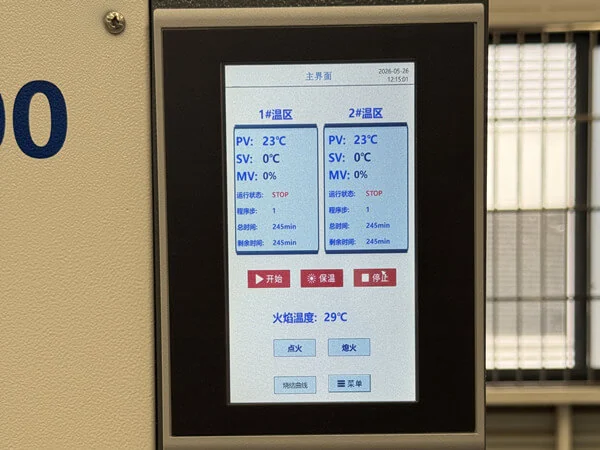
These photographs show the assembled HQH-1200 platform—not a generic illustration—so engineers can review the access, work chamber, two-zone interface and installed auxiliary equipment before discussing options.
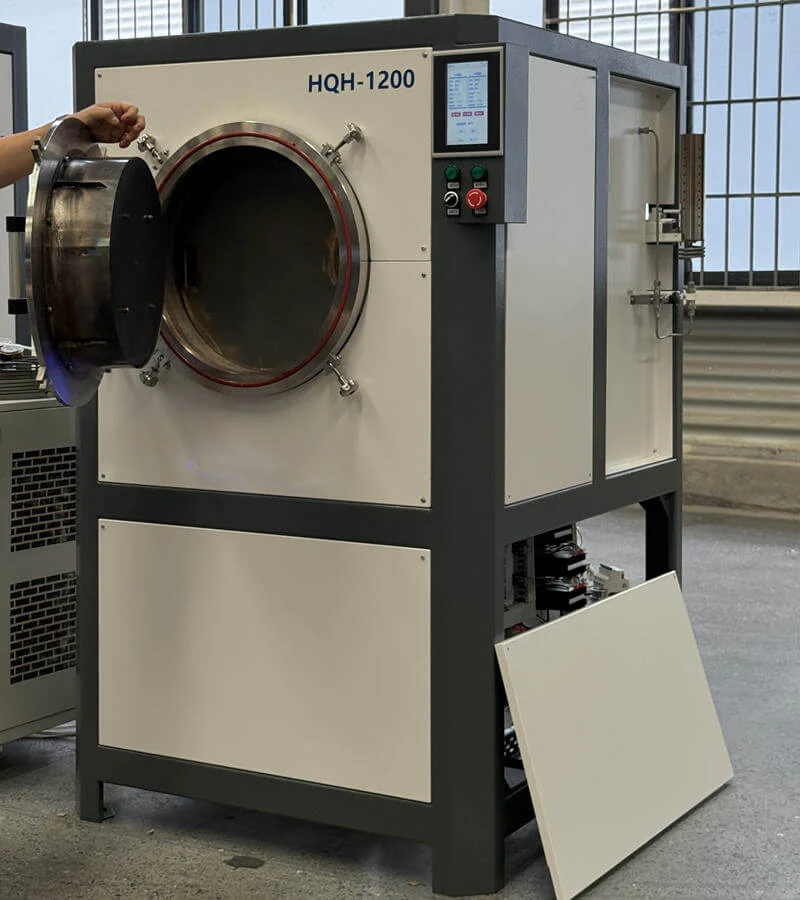
SYNHTE HQH-1200 hydrogen atmosphere furnace with the retort door open
Open retort and front access The assembled furnace shows the circular process chamber, door hardware, touchscreen and service-side access.
HQH-1200 dual-zone touchscreen showing two temperature-control zones
Two-zone touchscreen Independent zone values, cycle functions and exhaust-ignition controls are grouped in one operating interface.
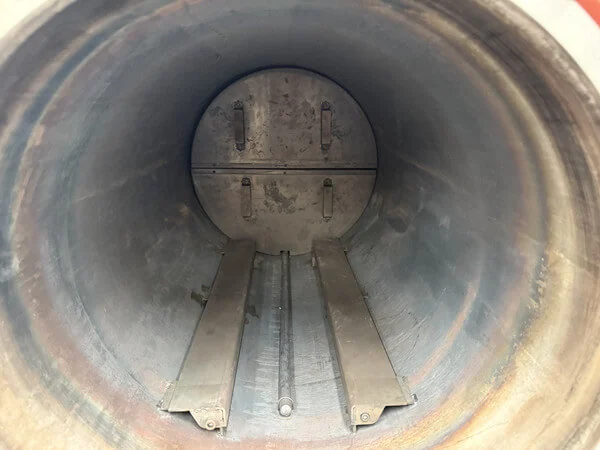
Interior of the HQH-1200 effective work chamber with load support rails
Effective work chamber The cylindrical retort and internal load rails provide the usable batch space for fixtures and components.
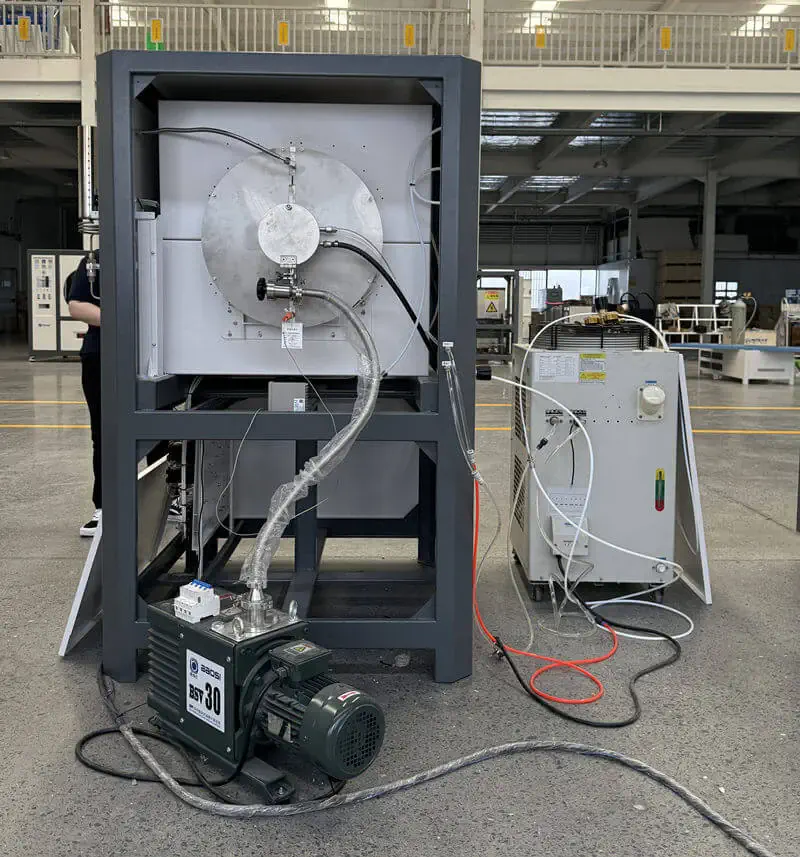
Rear view of HQH-1200 with vacuum pump, cooling unit and process connections
Vacuum and cooling package Rear service connections are shown with the supplied VRD-8 vacuum pump and 1.5P cooling unit.
Process architecture

Integrated process sequence and safe-state response

The complete system coordinates the furnace, gas transitions, process controls and documented responses to utility or sensor loss.

01

Prepare

Load, close and verify the approved pre-start conditions.

02

Evacuate / purge

Remove or displace air through the project-approved sequence.

03

Admit atmosphere

Enable the defined gas only after all permissives are satisfied.

04

Run the cycle

Control temperature, gas conditions and required process records.

05

Make safe

Cool, transition atmosphere and release the load under the approved logic.

Process safety: Purge logic, gas limits and safety setpoints are engineered for the supplied gas system, furnace volume and installation conditions.

Hydrogen gas management

Hydrogen gas-control and safety configuration

The furnace package combines core process hardware with configurable gas supervision, purge, exhaust and facility interfaces.

Integrated with the HQH-1200 platform

  • Closed process retort / tubeØ480 mm chamber architecture.
  • Vacuum preparationVRD-8 pump with a 10 Pa ultimate vacuum.
  • Gas meteringRotameter arrangement with available control upgrades.
  • Exhaust ignitionElectromagnetic pulse ignition with K-type temperature monitoring.
  • Water cooling1.5P chiller supporting the equipment package.

Configured for the installation site

  • Gas train and purge logicValves, regulators, permissives, transition sequence and verification.
  • Detection and ventilationHydrogen detection, room extraction and loss-of-ventilation response.
  • Exhaust integrationRouting, treatment, ignition interface and safe discharge requirements.
  • Safe-state behaviorResponse to power, cooling, gas, exhaust, sensor or PLC fault.
  • Gas qualityComposition, purity, pressure, flow and dew-point requirement where relevant.
  • Compliance and acceptanceLocal codes, customer standards, risk review, FAT, SAT and operator training.
Supply & enquiry

Supply scope and RFQ requirements

A detailed process brief allows the furnace, gas system, controls and acceptance scope to be configured together from the first proposal.

  • Reference supplyFurnace bodyHQH-1200 retort, effective work zone and two independently controlled 300 mm heating zones.
  • Reference supplyVacuum packageVRD-8 vacuum pump and chamber-preparation connections.
  • Reference supplyCooling package1.5P water chiller and the corresponding equipment interfaces.
  • Reference supplyExhaust ignitionElectromagnetic pulse ignition with K-type temperature monitoring.
  • Project configurationAtmosphere controlRotameter arrangement with MFC or multi-line gas-control options where required.
  • Site interfaceDetection, ventilation and exhaustDefine responsibilities, signals and safe-state responses for the installation.
  • Order definitionDocumentationSpecify drawings, manuals, certificates and process records in the purchase order.
  • Acceptance optionFAT, SAT and trainingAgree test scope, responsibilities and operator handover before manufacture.
Frequently asked questions

Technical questions before quotation

These answers cover the main atmosphere, vacuum, gas-control and quotation questions.

Can the furnace use pure hydrogen?

Yes. The configuration can support pure or diluted hydrogen with the appropriate gas composition, pressure, flow, purge sequence, valve architecture, detection and exhaust package for the process and site.

Is the 10 Pa rating suitable for high-vacuum sintering?

The 10 Pa vacuum level supports chamber preparation and atmosphere exchange. Processes that depend on high vacuum are better matched to a dedicated vacuum-sintering or heat-treatment furnace.

Is dew-point control included as standard?

Dew-point measurement and recording are available when moisture control is part of the qualified process. Include the target range and acceptance method in the RFQ.

Are hydrogen detection and ventilation part of every furnace?

Hydrogen detection, room ventilation, exhaust integration and facility alarms are configured around the installation and local requirements, with responsibilities agreed between SYNHTE and the site engineering team.

What information is needed for a technical quotation?

Provide the material, load size and weight, temperature cycle, atmosphere composition and quality, gas-flow and pressure ranges, vacuum preparation, cooling target, batch frequency, site utilities, installation country, exhaust route, standards, and FAT / SAT scope.

Configure the atmosphere, chamber and safety scope

Send the load, thermal cycle, atmosphere, utilities and site-safety inputs. SYNHTE can then evaluate whether HQH-1200, a modified atmosphere furnace or another furnace family is the technically appropriate route.

Technical download

HQH-1200 Hydrogen Atmosphere Tube Furnace Specifications

Download the current reference document or compare all available SYNHTE technical resources.

Contact Us

15+ Years Industrial Experience

Annual output 200+

CE & ISO Certified

Reply within 12 hours

Professional technical support

Free consultation service