
Graphite vs Molybdenum Hot Zones: How to Select a Vacuum Furnace Heating System
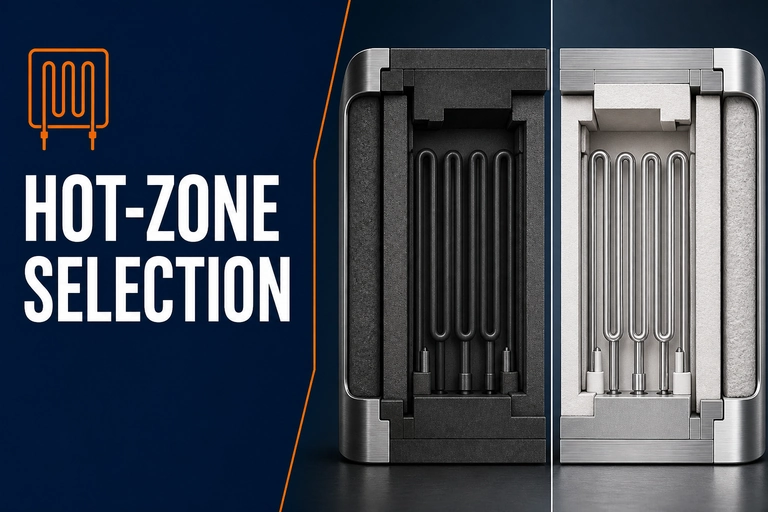
Graphite vs molybdenum hot zones should be compared against the actual atmosphere, temperature, contamination sensitivity and maintenance plan rather than selected from a single material preference. The best choice follows the process and qualification risk.
Graphite vs Molybdenum Hot Zones: Selection Priorities
Quick answer
Graphite and molybdenum hot zones solve different process problems. The appropriate choice follows the material, allowable carbon interaction, temperature range, vacuum or atmosphere, cleanliness requirement, load geometry, maintenance expectation and qualification evidence. Neither is a universal “better” option.
Why hot-zone material matters
The hot zone is part of the process environment, not merely insulation around a heater. Its heater elements, shields, supports and fasteners influence radiative heat transfer, temperature uniformity, maintenance planning and the interaction between furnace construction and sensitive materials. A selection made from maximum temperature alone can overlook the reason a customer is moving to vacuum processing in the first place.
Start from the metallurgical and product requirement: what material is processed, what surface or chemistry must be protected, which temperatures and atmospheres are used, and what records prove the outcome? The heater system follows those answers.
A practical comparison
The comparison visual makes the material contrast visible, while the process and chemistry still determine the final selection.
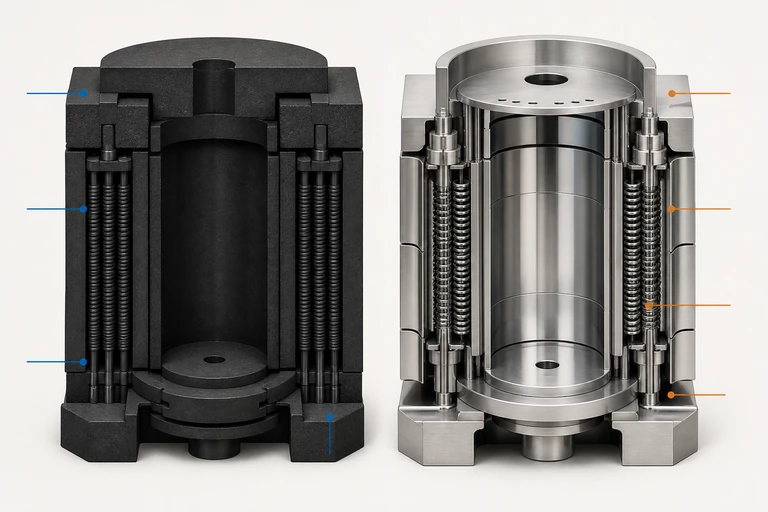
| Factor | Graphite hot zone | Molybdenum hot zone |
|---|---|---|
| Material interaction | Requires review where carbon pickup or reaction is a process risk | Can be considered where carbon control and clean metallic conditions are important |
| Thermal behaviour | Well suited to many high-temperature vacuum processes when engineered for the load | Useful for controlled heating applications requiring a metallic hot-zone system |
| Atmosphere compatibility | Must be assessed against the planned vacuum and gas environment | Must be assessed against the planned vacuum and gas environment |
| Maintenance decision | Evaluate shields, elements, contamination and service accessibility | Evaluate elements, shields, mechanical condition and service accessibility |
| Qualification | Confirm with representative loads, temperatures and acceptance evidence | Confirm with representative loads, temperatures and acceptance evidence |
Ask process questions before specifying construction
For brazing, filler family, base alloy and service environment matter. For heat treatment, the alloy, surface condition, quench method and distortion risk matter. For sintering, the powder chemistry, binder system, carbon balance and densification requirements matter. The same furnace temperature can represent very different process risks.
Also define the usable work zone, load arrangement and required uniformity. A hot zone that performs well with a compact demonstration load may require a different arrangement for a large fixture, a high thermal-mass charge or an application with strict spatial control. The Temperature Uniformity and TUS Guide explains why equipment-level uniformity and part-level qualification should be considered separately.
Turn selection into a specification checklist
- Define the base material, filler or powder chemistry and any prohibited contamination.
- State maximum operating temperature, routine temperature range and atmosphere sequence.
- Give the load envelope, mass, fixtures and representative heat-transfer condition.
- Specify required work-zone uniformity, recording and qualification documentation.
- Identify cleaning, maintenance access and change-control expectations.
- Validate the configuration with a representative process trial or agreed acceptance plan.
For a broad equipment decision tree, read How to Choose the Right Vacuum Furnace. Stainless steel brazing teams can also use the Vacuum Brazing Stainless Steel Process Guide to frame material and filler questions.
For an overall equipment map, start with Vacuum Furnace Systems. Where high-temperature brazing is the intended process, review the High Temperature Vacuum Brazing Furnace to connect hot-zone material selection with the furnace configuration.
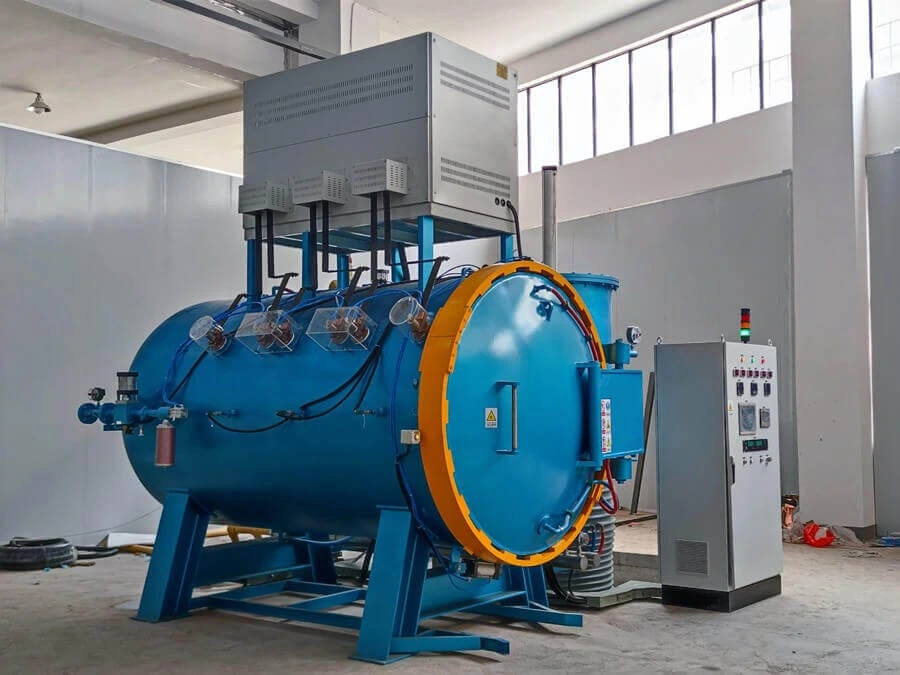
High-Temperature Vacuum Brazing Furnace
Process-led configuration connects the hot-zone system with the temperature range, vacuum performance, load and cooling method required for the qualified assembly.
- Hot-zone design reviewed against process chemistry
- Work-zone and load configuration
- Data and acceptance requirements defined early
What to include in your enquiry
Share the process envelope so the heating system can be reviewed in context.
- Material grades, filler or powder chemistry and surface requirement
- Operating temperature range, vacuum and atmosphere sequence
- Work-zone dimensions, load mass, fixture design and production rate
- Uniformity tolerance, data-recording and acceptance requirements
- Cleaning, maintenance and change-control constraints
Technical references
- SAE AMS2750 — Pyrometry — official SAE scope for control and testing of furnaces and pyrometric equipment.
- AIAG CQI-9 — Special Process: Heat Treat System Assessment — official AIAG heat-treatment system-assessment reference.