01
Pressure-Assisted Densification
Apply programmed axial force through a die or tooling assembly while the material is heated in a controlled environment.
Coupled heat + force
A configured vacuum hot press platform for pressure sintering, densification and thermo-mechanical consolidation of high-value materials. VMPE systems combine programmable temperature, axial force and controlled vacuum or atmosphere around your graphite die, tooling and process window.
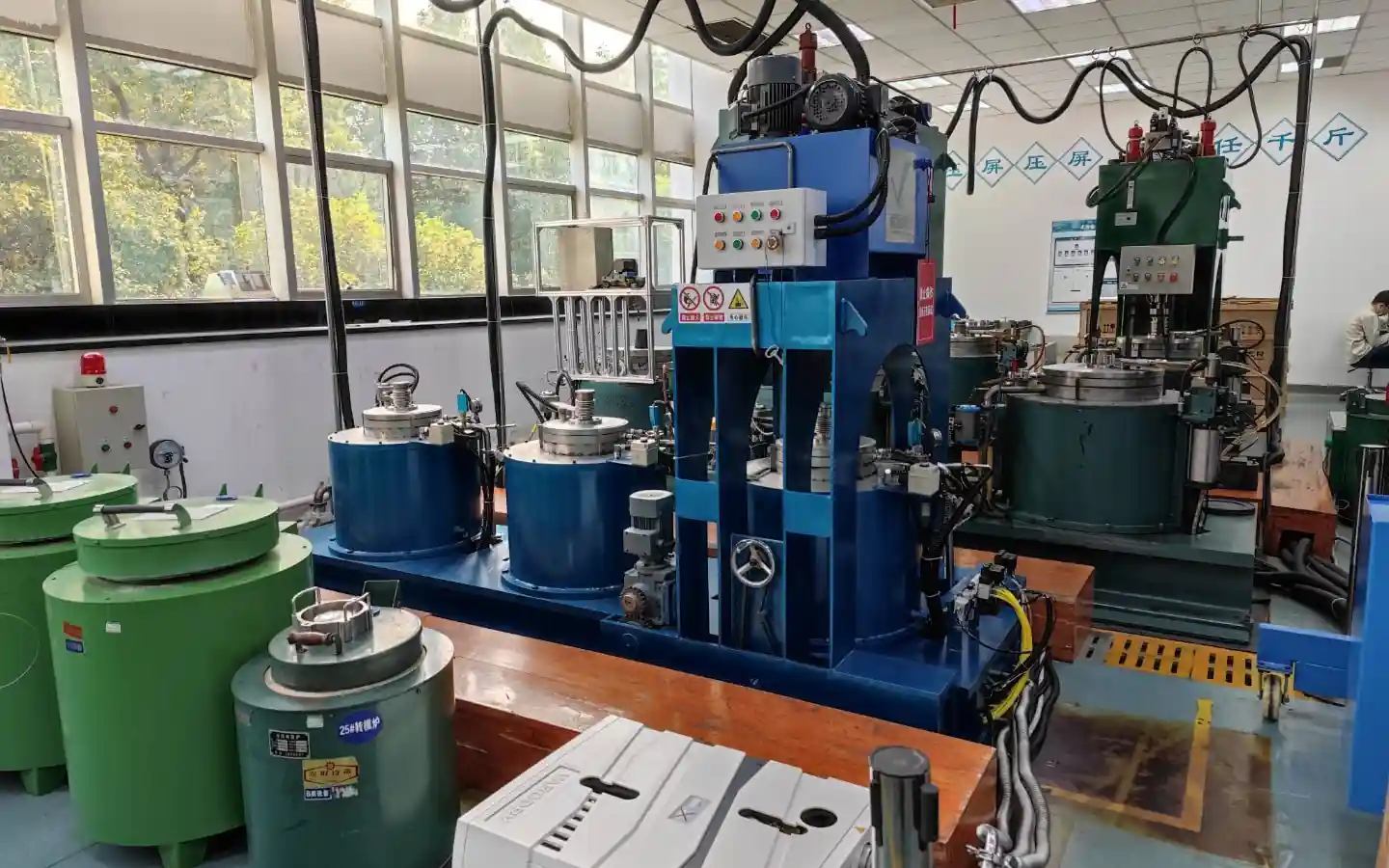
Vacuum hot pressing brings temperature and controlled mechanical load into the same recipe. The result is a practical platform for processes where die contact, pressure history, clean atmosphere and traceable thermal cycles all affect the material outcome.
Apply programmed axial force through a die or tooling assembly while the material is heated in a controlled environment.
Coupled heat + forceConfigure the evacuation, inert-gas or partial-pressure strategy around the material system and its sensitivity to oxidation or contamination.
Process atmosphereCoordinate heating, pressure, dwell, displacement and cooling as an engineered cycle rather than independent manual adjustments.
Traceable cyclesA usable hot-press specification starts with the part and die stack. These five gates connect the material objective to the press frame, hot zone, vacuum system, controls and acceptance plan.
Hot-zone and tooling materials are reviewed against oxidation, contamination sensitivity, shrinkage, target density and final geometry.
Composition, powder or preform condition, target density or property, part dimensions and acceptable surface interaction.
Press force, ram travel, chamber opening, press-head arrangement and working clearance are matched to the die drawing and contact area.
Die material, outside dimensions, loaded height, projected area, stroke, release route and loading method.
Heating, force ramp, dwell, displacement monitoring, release and cooling are coordinated as one recipe with defined control channels.
Maximum and working temperature, force or pressure curve, dwell time, heating rate, cooling limit and required recorded data.
Pump train, valves, process-gas path and interlocks are selected around outgassing, contamination risk and the required process environment.
Ultimate and working vacuum, inert or partial-pressure gas, gas purity, purge sequence and process off-gas considerations.
Utilities, service access, recipe storage, data export, safety logic and FAT/SAT scope are fixed before design release.
Batch rate, shifts, destination utilities, installation constraints, witness tests, documentation and support boundary.
The loading direction, tooling contact and process atmosphere determine whether a vacuum hot press is the right architecture.
Final parameters are subject to confirmation by the SYNHTE engineering team based on material, tooling, part geometry, load and process flow.
Swipe horizontally to view all technical parameter columns
| System | Technical parameter | Value | Product value |
|---|---|---|---|
| Vacuum performance | |||
| Ultimate vacuum | Cold, empty furnace after purification | 9×10⁻⁴ Pa | Clean high-vacuum process environment |
| Working vacuum | Process vacuum | 9×10⁻³ Pa | Material and atmosphere strategy can change the target |
| Pressure-rise rate | Cold, empty furnace after purification | ≤0.3 Pa/h | Leak-rate criterion |
| Pump-down | Main valve open to working vacuum | ≤40 min | Empty-furnace pump-down performance |
| Thermal system | |||
| Maximum temperature | VMPE 100T model | 1600°C | High-temperature processing for demanding materials |
| Working temperature | Working process range | 1400–1500°C | Selected to match your material process |
| Temperature uniformity | Empty furnace, 1000°C, five-point test | ≤±7.5°C | Optimized with your die, load and process |
| Temperature control accuracy | VMPE 100T model | ±1°C | Stable control for repeatable thermal cycles |
| Press and tooling interface | |||
| Rated press force | Four-column hydraulic press | 100 T | Press force available to suit your process |
| Pressure control | Above 1T; rigid material after stabilization | ±0.1% FS | Closed-loop force control |
| Displacement resolution | Grating scale display | 0.001 mm | Useful for displacement monitoring and recipe development |
| Maximum stroke | Single-direction pressing | 100 mm | Stroke matched to your tooling arrangement |
| Uniform hot zone | L × W × H / cylindrical zone | Ø155 × 50 mm | Working zone |
Final parameters are subject to confirmation by the SYNHTE engineering team based on material, tooling, part geometry, load and process flow.
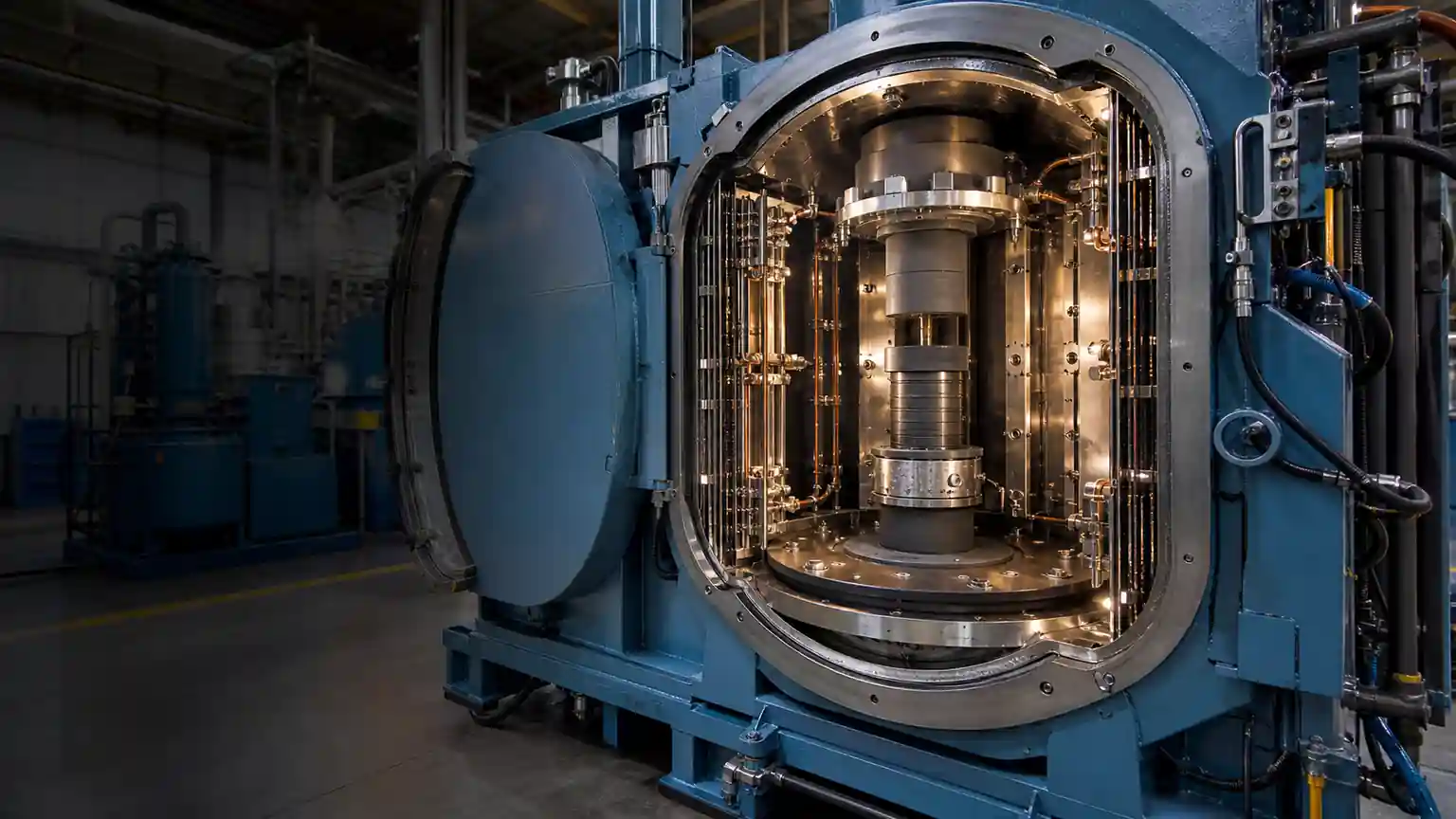
The VMPE layout brings the hydraulic press axis to the furnace chamber so the load path, displacement monitoring and die arrangement can be treated as one system. That matters when tooling stiffness, ram parallelism and pressure history influence final density or geometry.
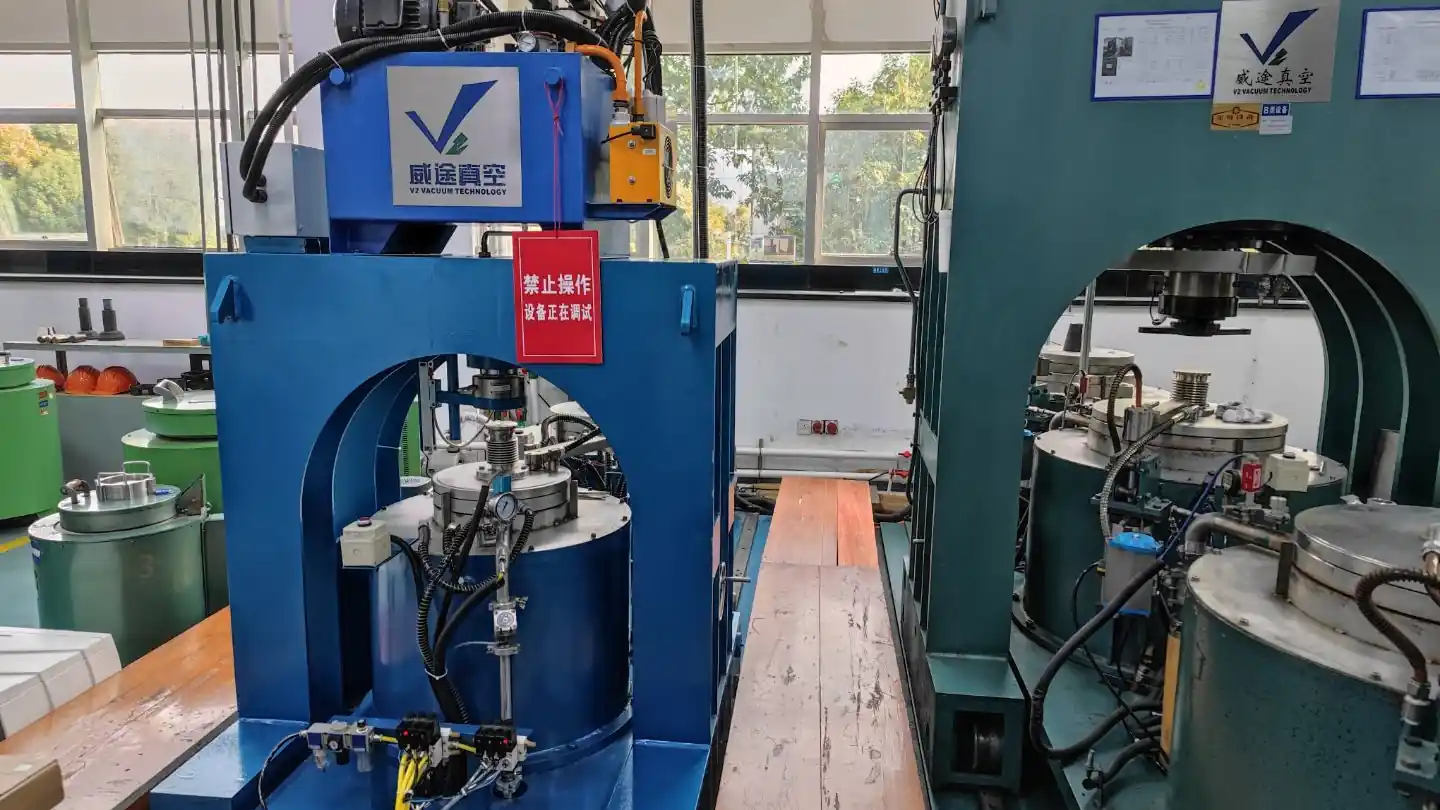
Vacuum hot pressing is commonly evaluated for powder consolidation, technical ceramics, composite materials, graphite-related tooling and selected metal or non-metal assemblies. The feasible process window must always be proven with your actual material, die and sample geometry.
Pressure sintering and densification trials for ceramic material systems and engineered shapes.
Thermal consolidation of metallic, hard-material or composite powders in a controlled die arrangement.
Processes that rely on graphite die components, press heads or high-temperature fixtures.
Configurable equipment for developing a recipe, recording results and scaling the working envelope.
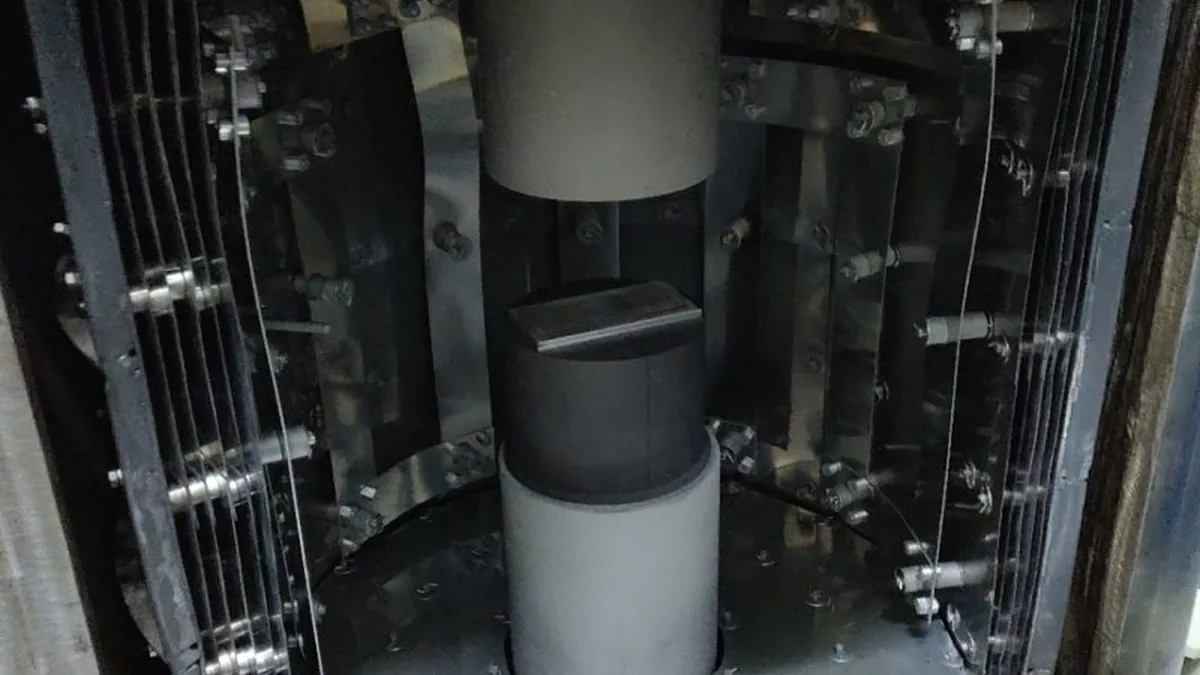
The VMPE 100T furnace combines molybdenum-lanthanum resistance heating, multi-layer molybdenum and stainless-steel reflective shielding, water-cooled electrodes and isotropic graphite press heads. This structure supports clean, stable high-temperature processing with a tooling layout matched to the part and material.
The control system stores up to 20 temperature curves with up to 20 program steps per curve.
Temperature programmingForce feedback, a proportional valve and a pressure controller coordinate ramp, hold and release steps around the material process.
Pressure historyTemperature, pressure and vacuum can be recorded for review, export and quality documentation; final channel selection is project-specific.
Data traceabilityUse the HMI to set recipes, monitor alarm states and review process values. The final I/O, recording channels, language, user permissions and data-export requirements should be agreed before the controls design is released.
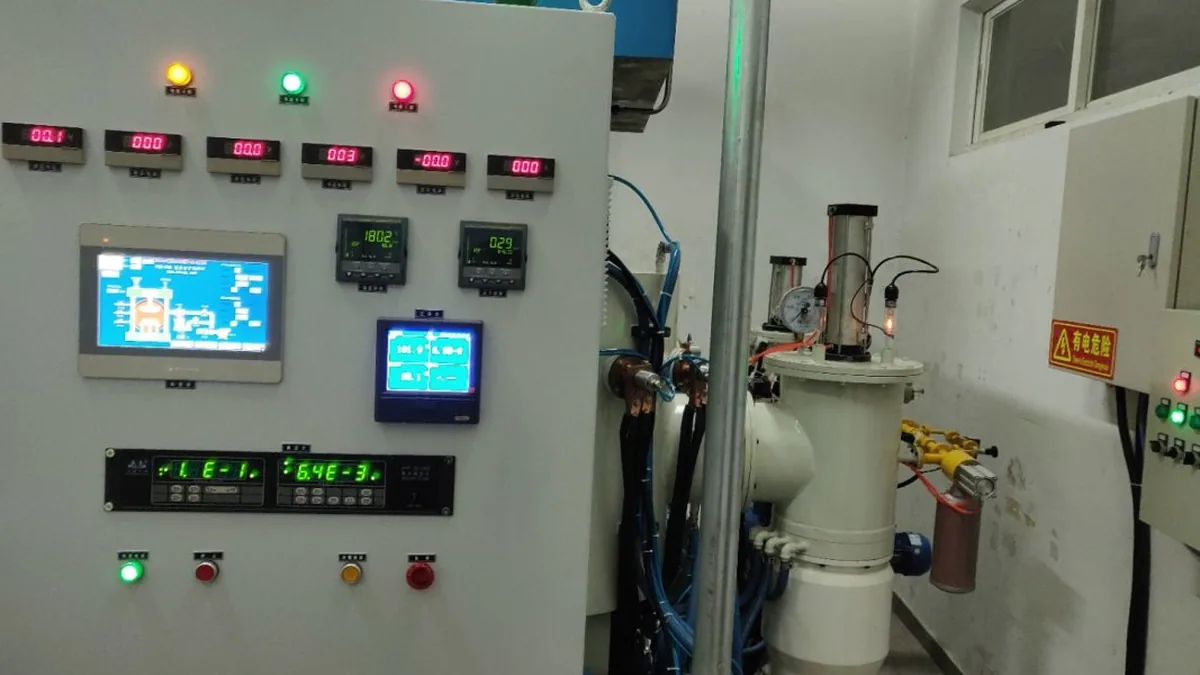
Water pressure, temperature and critical electrode-return monitoring help protect the hot zone and support stable operation.
Valve state, vacuum level, gas handling and process permissives are integrated into the automatic sequence.
Design the press controls around force feedback, pressure limits, position feedback and the required manual setup functions.
Composition, powder or preform condition, sensitivity and target properties.
Die drawings, contact area, stroke, load path and release strategy.
Temperature, pressure, vacuum or gas, dwell and cooling.
Hot zone, press force, pump train, controls and safety interfaces.
Confirm the key performance points, delivery documentation and service support.
Send the inputs that define the material, die, pressure cycle and acceptance boundary. The engineering team can then recommend a realistic VMPE configuration and identify any missing test assumptions.
The final acceptance plan should match the ordered material route, tooling and control package. The values below describe what should be agreed and witnessed; project-specific limits remain in the technical agreement.
Define the test condition for ultimate vacuum, working vacuum, pressure-rise rate and pump-down. Record whether the chamber is cold, empty and purified.
Agree the test temperature, sensor positions, empty or loaded condition, control accuracy and the uniformity evidence required for release.
Confirm press-force indication, force-control behavior, stroke and displacement resolution against a test method suited to the die and load path.
Witness interlocks, alarms, cooling protection, valve logic, recipe execution and the agreed export of temperature, force, displacement and vacuum data.
Use these links when the part is better served by a joining or thermal-treatment process rather than a pressure-sintering cycle.
Send the material data, part or die drawings, target thermal-pressure cycle and installation requirements. Our technical team can recommend the hot zone, press system, vacuum package and controls for the project.
Download the current reference document or compare all available SYNHTE technical resources.