info@synthe-corp.com

+86-155-3785-7393

Clean batch heat treatment

Vacuum Annealing Furnace

Configure the annealing route around the alloy, starting condition, target properties, surface requirement, real load and acceptance plan—not a nominal temperature alone.

SYNHTE vacuum annealing furnace
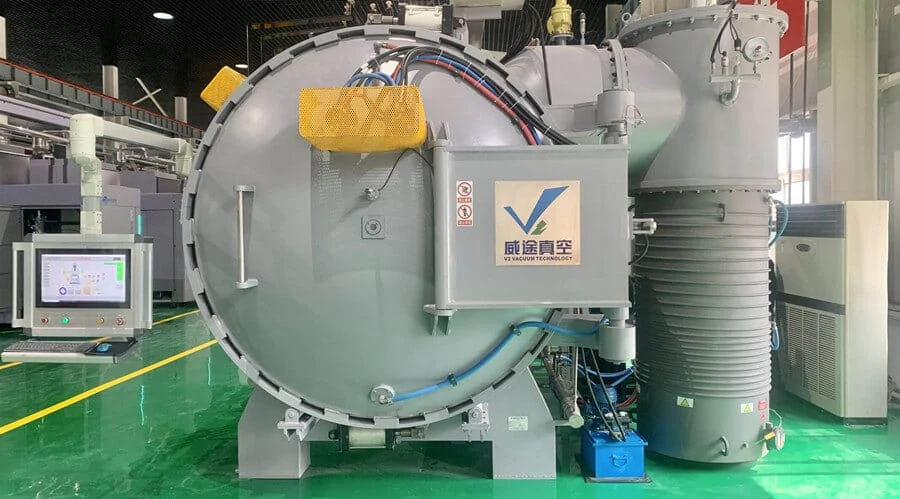
Horizontal vacuum annealing furnace. Chamber size, hot zone, pumping and cooling systems are selected for your application.
Up to 1300°CMaximum operating temperature
5 × 10⁻⁴ PaUltimate vacuum
100–1500 kgConfigurable load range
Custom configurationHot zone, pumping, cooling and loading

Application fit

Start with the material and required result

A vacuum annealing furnace is selected for clean batch annealing, stress relief, bright heat treatment and related thermal cycles where surface condition, thermal consistency and repeatable recipes matter.

The same furnace label can hide very different process needs. Confirm the alloy, incoming condition and acceptance criteria before selecting the hot zone, pumping system or cooling route.

Have a specific alloy, load or annealing result? Discuss material and process fit
Material route

Stainless steels

Typical project question: Is the priority bright surface condition, stress relief, softening or a controlled metallurgical response?

Define before selection: grade, starting surface, load density, contamination control, temperature profile, vacuum condition and cooling target.

Process boundary

Carbon and tool-steel projects

Typical project question: Does the required result call for annealing or stress relief, or is the next operation actually a tempering route?

Define before selection: alloy and prior heat treatment, hardness target, section thickness, distortion limit and required cooling control. For a tempering-centered process, review the Vacuum Tempering Furnace.

Compatibility

Titanium and nickel alloys

Typical project question: What vacuum, hot-zone material and cleanliness boundary are required for the alloy and target surface?

Define before selection: alloy, process temperature, starting cleanliness, fixture materials, allowable surface change and the inspection method.

Specialized loads

Copper, magnetic alloys and powder-metal parts

Typical project question: Is the purpose annealing, degassing, stress relief or another defined thermal treatment?

Define before selection: material condition, part geometry, fixture and load arrangement, outgassing behavior, atmosphere limits and result verification.

Configuration logic

Turn the annealing requirement into four equipment decisions

Review these decisions together. Chamber size, vacuum performance and cooling capacity should all support the complete load and required process result.

01 / MATERIAL

Alloy and starting condition

Identify the grade, prior forming or machining route, surface condition and the result required after annealing.

02 / THERMAL

Cycle and vacuum

Define the temperature profile, soak requirement, allowable surface change, vacuum or protective-gas need and recipe controls.

03 / LOAD

Work zone and cooling

Use the complete workpiece, fixture and batch envelope—not the largest single part—to size the usable zone and cooling route.

04 / EVIDENCE

Acceptance method

Agree how temperature uniformity, surface condition, hardness or other results will be checked and recorded before fabrication.

Configurable performance range

Match the furnace range to your process

Select the working temperature, usable zone, load capacity, vacuum and cooling system together so the furnace matches your parts, cycle and acceptance requirements.

Maximum temperature
1300°C
Select the hot-zone material for the required process temperature.
Temperature uniformity
±5°C
Specify the working volume, survey temperature and test method.
Ultimate vacuum
5 × 10⁻⁴ Pa
Select the vacuum system for process pressure and load behavior.
Pressure rise rate
0.5 Pa/h
Set the test method and acceptance limit in the technical specification.
Gas-cooling pressure
2 bar
Size the cooling route for load mass, geometry and distortion limit.
Effective zone range
300 × 300 × 450 to 1000 × 1000 × 1500 mm
Match the usable zone to the complete workpiece and fixture envelope.
Loading capacity
100–1500 kg
Include workpieces, fixtures, trays and the loading method.
Heating power
80–450 kW
Sized for the chamber, process cycle and available site utilities.

Share the material, complete load, utilities, required records and acceptance method to turn this range into a project-specific proposal.
System definition

Temperature, vacuum and cooling work as one process system

  • Hot zone

    Choose graphite or metallic hot-zone construction according to process temperature, material compatibility, cleanliness and maintenance requirements.

  • Heating

    Nickel-chromium and molybdenum heating options support different hot-zone designs and process temperatures.

  • Vacuum

    Select rotary-vane, diffusion-pump or molecular-pump combinations according to process pressure, load behavior and contamination limits.

  • Atmosphere

    Nitrogen, argon, hydrogen or mixed gas can be evaluated where compatible with the process and site safety requirements.

  • Cooling

    Match the water- and air-cooling provisions to the cooling target, load mass and distortion limit.

  • Controls

    PLC and touchscreen controls support programmable recipes and process records. Specify the required alarms, data fields, permissions and export format.

Result and acceptance

Make the required result measurable

Translate “bright,” “uniform” and “low distortion” into measurable purchase requirements: representative parts, test conditions, measurement locations and acceptance limits.

On a narrow screen, swipe horizontally to review all columns.

Vacuum annealing result and acceptance matrix
Required resultConfiguration inputsAcceptance evidence to define
Surface conditionStarting cleanliness, hot zone, pumping sequence, vacuum or gas route, fixture materials and load density.Representative parts, visual or analytical criteria, agreed inspection points and record format.
Hardness or material responseAlloy and starting condition, heat-up, soak, cooling profile and load thermocouple strategy.Sample location, test method, permissible range and traceable recipe record.
Dimensional stabilityPart geometry, prior stress, fixture support, loading pattern, thermal gradients and cooling control.Reference dimensions, measurement method, sampling plan and allowable change.
Temperature uniformityUsable work zone, operating temperature range, load arrangement, sensors and control architecture.Survey volume, sensor locations, stabilized condition, tolerance and report requirements.
Vacuum performanceChamber condition, pump train, load outgassing, seals, instrumentation and operating sequence.Ultimate-pressure and pressure-rise test conditions, instruments and acceptance limits.

For temperature evidence planning, review the vacuum furnace temperature uniformity and TUS guide.

From scope to acceptance

Align the furnace and the evidence before fabrication

Bring your representative load, required result and acceptance method into the technical discussion. SYNHTE can then align furnace configuration, FAT records and project documentation around the agreed scope.

View SYNHTE company and factory information

  1. Process definition

    Confirm alloy, starting condition, real load, target result, production pattern and site constraints.

  2. Configuration review

    Align hot zone, work zone, vacuum train, cooling, loading, controls, utilities and optional modules.

  3. FAT scope

    Agree the test parts or simulated load, instruments, records, acceptance limits and document package.

  4. Delivery and SAT boundary

    Define responsibilities for installation interfaces, commissioning, site checks, training and final acceptance.

Engineering RFQ

Prepare the information needed for a relevant proposal

Send drawings, complete-load information, process targets and acceptance requirements. The engineering team will use them to prepare the proposed furnace configuration.

  • MaterialAlloy grade, drawing, starting condition and target properties.
  • Complete loadPart and fixture envelope, batch mass and loading method.
  • Thermal cycleTemperature profile, soak, cooling and recipe requirements.
  • Surface & distortionAllowable surface change, hardness and dimensional limits.
  • Vacuum & gasPressure target, protective-gas need and site safety boundary.
  • ProductionBatch frequency, recipe mix, handling and automation needs.
  • UtilitiesPower, cooling water, gas, exhaust and plant interfaces.
  • AcceptanceFAT/SAT, uniformity, records, standards and document package.
Technical download

VTA Vacuum Annealing Furnace Selection Guide

Download the current reference document or compare all available SYNHTE technical resources.

Contact Us

15+ Years Industrial Experience

Annual output 200+

CE & ISO Certified

Reply within 12 hours

Professional technical support

Free consultation service