Why Vacuum Brazing Is Better Than Conventional Joining
Compared with welding or adhesive bonding, vacuum brazing offers several major advantages.
1. Oxidation-Free Aluminum Joining
Aluminum is highly reactive at brazing temperatures.
Traditional atmosphere processes often create oxide layers that reduce wetting quality.
Vacuum furnaces eliminate oxygen and reactive gases, ensuring:
- excellent filler metal flow
- stronger capillary action
- cleaner joint surfaces
- improved bond strength
This is especially critical for microchannel cooling plates.
2. Superior Leak Tightness
Cooling plates require hermetic sealing.
Vacuum brazing enables:
- continuous filler penetration
- full channel sealing
- minimal porosity
- no slag inclusion
This greatly improves:
- helium leak performance
- long-term coolant reliability
- pressure resistance
3. Better Thermal Conductivity
A well-brazed joint reduces interface thermal resistance.
This directly improves:
- heat dissipation efficiency
- fast charging performance
- battery life
- thermal runaway prevention
Industry data shows that advanced microchannel plates can significantly improve heat transfer performance.
Process Flow of Vacuum Brazing for EV Cooling Plates
A standard production workflow typically includes:
Material Preparation
- aluminum clad sheets
- manifolds
- fins / channel structures
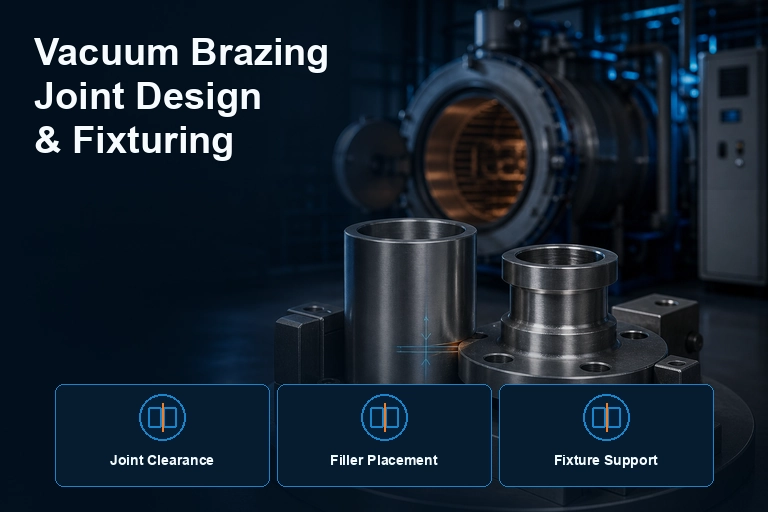
Fixture Assembly
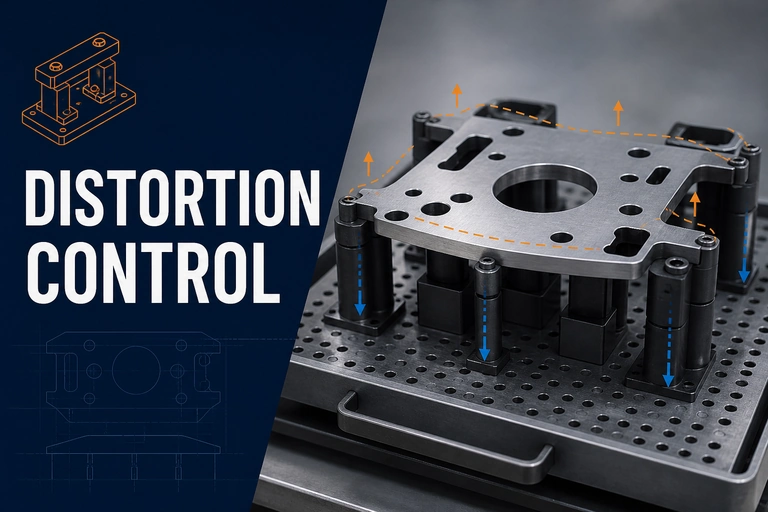
Precision fixtures maintain:
- flatness
- channel gap control
- dimensional tolerance
Vacuum Furnace Brazing
Typical process temperature:
580–620°C
The chamber is evacuated to high vacuum before heating.
At brazing temperature, the filler alloy melts and flows through capillary action.
Controlled Cooling
Controlled cooling minimizes:
- warping
- residual stress
- plate deformation
Main Application Areas
EV battery cooling plates are now widely used in:
Battery Pack Thermal Systems
- passenger EVs
- commercial EVs
- hybrid vehicles
Power Electronics Cooling
- inverters
- DC/DC modules
- motor controllers
Server Liquid Cooling
The same vacuum brazing process is increasingly used in:
- AI server cold plates
- data center cooling modules
- communication base station cooling systems
Industry Trends in 2026
The industry is now moving toward:
800V High-Voltage Platforms
Higher charging speeds generate more thermal load.
This requires:
- larger cooling area
- more precise channel structures
- stronger brazed joints
Cell-to-Pack / Cell-to-Chassis Design
Integrated battery architecture increases demand for custom cooling plates.
This trend strongly benefits vacuum brazing applications.
Fully Automated Continuous Brazing Lines
Manufacturers are increasingly upgrading to:
- automatic loading
- inline conveyor systems
- robotic unloading
- 24h continuous production
This improves consistency and reduces labor costs.
Final Thoughts
With EV battery systems becoming more compact and thermally demanding, vacuum brazing furnace technology is no longer optional—it is a core manufacturing process.
From leak-proof cooling plates to advanced liquid thermal modules, vacuum brazing plays a decisive role in product quality, safety, and mass production efficiency.
For manufacturers targeting EV, energy storage, or data center cooling markets, investing in high-quality vacuum brazing capability is becoming a key competitive advantage.